





Should Drone Batteries be Stored Fully charged
Time: 2025-08-14 14:59:22
Introduction
Have you ever casually stuffed a fully charged drone battery into your backpack after a flight, ready to use it again next time? Little do you know that this seemingly convenient practice is quietly eroding the lifespan of your expensive drone battery. Many drone users habitually store batteries fully charged without realizing the significant risks involved. This article will delve into whether storing drone batteries fully charged is safe, analyze the scientific principles behind battery degradation, and provide best practices for long-term storage to help you extend battery life and avoid unnecessary losses.
What is Drone Batteries
Common Types of Drone Batteries
The most common type of battery used in drones today is the lithium-polymer battery (LiPo), which, thanks to its high energy density and lightweight design, has become the preferred choice for both consumer-grade and professional-grade drones. Lithium-ion batteries (Li-ion) are relatively less common and are only used in some consumer-grade drones. While their performance differs from that of lithium-polymer batteries, their storage and usage principles share similarities.

How Drone Batteries Work
Drone batteries operate based on electrochemical reactions, with key metrics including voltage, charge cycle count, and chemical properties. Battery voltage changes with charge levels; for example, a typical LiPo cell voltage is approximately 3.7V at the end of discharge and reaches 4.2V when fully charged. Charge cycle count refers to the complete process of charging the battery from full capacity to complete discharge and back to full capacity. High-quality drone batteries typically support 200–300 charge-discharge cycles. From a chemical perspective, the battery stores and releases energy through the migration of lithium ions between the positive and negative electrodes, and the stability of this process directly affects battery performance.
The Importance of Storage Methods
The storage method of batteries is critical because voltage levels are closely related to the chemical stability within the battery. When the battery is in different voltage states, the chemical substances inside undergo different reactions. Both excessively high or low voltages can disrupt the stability of the battery's internal structure, accelerate the decomposition and aging of chemical substances, and consequently affect the battery's capacity, discharge performance, and service life. Therefore, selecting an appropriate voltage state for storage is essential for maintaining the battery's chemical stability.
Should Drone Batteries be Stored Fully Charged
The answer is clear: it is not recommended to store drone batteries fully charged. When fully charged, the battery is in a high-voltage environment, which can cause damage to the battery in multiple ways and is not conducive to long-term use.
Chemical Effects of Full-charge Storage
• Cell voltage stress: When fully charged, the voltage of each cell reaches 4.2V, subjecting the cells to significant voltage stress, which can trigger excessive chemical reactions and lead to the loss of active materials. •
• Increased internal resistance: Long-term storage at full charge accelerates the decomposition of the electrolyte inside the battery, thereby increasing its internal resistance. As internal resistance rises, the battery generates more heat during discharge, reducing discharge efficiency.
• Gas Accumulation and Expansion Risk: In high-voltage environments, the battery is prone to side reactions that produce gases. If these gases cannot be released in time, they may cause the battery to swell and expand, potentially leading to battery rupture or even fire.
Fully Charged State: “How Long Is Too Long?”
In a fully charged state, short-term storage (a few hours to one day) is generally safe and does not cause significant damage to the battery, such as charging the battery fully before a flight and waiting a few hours before use. However, for long-term storage (weeks or even months), a fully charged state can have severe adverse effects on the battery, accelerating battery degradation.
Manufacturer Warnings and Guidelines
Major drone and battery manufacturers have issued clear warnings and guidelines regarding battery storage. For example, DJI explicitly states that during long-term storage, the battery charge should be maintained between 40% and 60%, and full charge storage should be avoided; EHang also reminds users that prolonged storage in a fully charged state significantly shortens battery lifespan and increases safety risks.
Ideal Storage Voltage for Drone Batteries
The ideal storage voltage range for drone batteries is 3.7–3.85V per cell, corresponding to a charge level of approximately 40%–60%. This intermediate charge level minimizes chemical degradation within the battery. At this voltage, the chemical reactions inside the battery are in a relatively stable state, and lithium-ion migration is relatively mild, avoiding both overreaction due to high voltage and cell passivation due to low voltage.
Best Practices for Drone Battery Storage

Temperature Control
Temperature has a significant impact on battery storage; both extremely high and low temperatures accelerate battery degradation. The ideal storage temperature is 15–25°C. Avoid storing batteries in environments with extreme temperature fluctuations, such as car trunks (extreme heat in summer, extreme cold in winter) or near heaters.
Humidity Considerations
Moist environments can cause battery electrode oxidation, affecting battery performance and potentially causing short circuits. Therefore, batteries should be stored in dry locations. Desiccants can be placed inside storage containers to prevent condensation.
Utilizing the Storage Mode of Smart Batteries
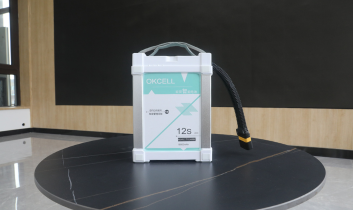
Many smart battery brands, such as OKCELL Battery, are equipped with an automatic discharge function. When the battery detects prolonged inactivity, it automatically discharges the battery to an ideal storage range, allowing users to store it long-term without manual intervention.
Manual Discharge Method for Non-smart Batteries
For non-smart batteries, manual discharge can be performed using a drone. Install the battery on the drone, turn it on without flying, and let it consume power in standby mode. Monitor the power level closely, and disconnect the power when it drops to 40%–60%. Alternatively, use a dedicated battery discharge device for more precise control of the discharge process.
Regular Maintenance Charging for Long-term Storage
Even if the battery is stored at an ideal charge level and in an ideal environment, regular maintenance charging is required for long-term storage (over 3 months). Every 3 months or so, charge the battery to approximately 50% to maintain internal activity and prevent excessive cell degradation.
What Happens if you Store the Battery Fully Charged
• Reduced lifespan (fewer charge cycles): Storing the battery fully charged accelerates the aging of its internal structure. A battery that could originally support 200–300 charge-discharge cycles may become unusable after just a few hundred cycles, significantly shortening its lifespan.
• Swelling and safety risks: As mentioned earlier, storing a battery at full charge can cause gas buildup inside the battery, leading to swelling. A swollen battery not only becomes unusable but may also leak, or even catch fire or explode, posing serious safety hazards.
• Actual cases of battery failure due to improper storage: Many drone users have reported that after storing fully charged batteries for several months, they found the batteries swollen and unable to charge when they tried to use them again; Some users experienced sudden power loss during flight due to long-term storage of fully charged batteries, resulting in drone crashes and significant losses.
Safety Tips for Storing Drone Batteries
• When storing batteries, use fire-resistant lithium-ion battery bags or metal containers to prevent fire spread in case of an accident.
• Avoid placing batteries in direct sunlight or near flammable items, and keep them away from heat sources to reduce the risk of fire.
• For damaged batteries, such as those that are swollen or leaking, proper disposal is required; they should not be discarded carelessly. They can be handed over to professional battery recycling facilities or disposed of in accordance with local environmental regulations.
Conclusion
Storing drone batteries at full charge is only acceptable for a short period before flight to enable quick takeoff. However, for long-term battery health, maintain a charge level between 40% and 60% and store them in an appropriate environment.
Are you looking for durable drone batteries? Explore OKCELL premium lithium-polymer batteries and smart battery series, designed for safety and durability.”

点击右上角
分享给朋友吧







 Long by picture save/share
-

The Heart of Your Operation: A Complete Guide to the Agricultural Drone Battery
A deep dive into how agricultural drone batteries influence power, safety, flight time, and operational efficiency, offering essential insights on specs, maintenance, and choosing the right battery.
MORE -
How China Drone Battery Manufacturers Are Ensuring Quality and Safety
China’s drone battery manufacturers are raising industry standards through advanced engineering, strict safety controls, and reliable quality systems that ensure safer, longer, and more stable flight performance.
MORE -
Expert Guide to Agricultural Drone Battery Maintenance
Ensure safer, longer agricultural drone flights with practical battery maintenance guidance that helps prevent power loss, extend lifespan, and keep field operations efficient.
MORE -
What Are the Best Practices for Maximizing Drone Battery Performance
Maximizing drone battery performance starts with understanding how different missions stress power systems. Smarter charging, temperature control, and load management keep flights safer and longer.
MORE -
How to Charge a Drone Battery Safely and Effectively
Learn how to charge drone batteries safely and maximize performance with proper methods, smart charger choices, and essential practices that protect lifespan and flight reliability.
MORE -
Agricultural Drone Common Sense
Modern agricultural drones transform farming by enabling precise spraying, crop monitoring, and irrigation management, improving efficiency, sustainability, and smarter decision-making on farms.
MORE -
How Can Upgrading Your Drone Battery Improve Its Battery Life
Upgrading your drone battery can significantly extend flight time, stabilize power output, and improve reliability. Smarter chemistry and better design help every mission last longer and perform better.
MORE -
Essential Advice for Picking the Perfect Drone Battery
Discover how selecting the right drone battery impacts flight performance, efficiency, and reliability. Learn to match battery features with real-world needs for safe, stable, and long-lasting operation.
MORE -
How Custom Lithium Battery Packs Elevate UAV Performance
Custom lithium battery packs elevate UAV performance by extending flight time, enhancing stability, and ensuring safety, enabling drones to operate efficiently and reliably across demanding missions.
MORE -
Drone Battery Guide: Types, Safety, and Flight Time
Explore drone battery types, safety practices, and factors affecting flight time to maximize performance, extend lifespan, and ensure reliable operation for every mission.
MORE





Contact Us
With 18 years of extensive experience in battery production andcustomization, we have served thousands of clients. OKcell can providepersonalized one-stop customization services tailored exclusively for you.Contact us directly to explore our factory and products firsthand !
 Phone:+86 15093446331
 E-mail:sherry@izeron.com
 Address:Building 5, 5th Floor, 503, Yida Industrial Park Phase 1, Jinju Street, Zhengzhou High-tech Zone.
OKCELL Copyright © 2021 all rights reserved
Since 2005, with 18 years of dedication to custom battery manufacturing, supported by a team of 300 employees, multiple R&D centers, and 65 patented inventions, we are committed to becoming the world’s leading smart battery manufacturing service provider.
ABOUT COMPANY
CONTACT US
Email Address:
 :sherry@izeron.com
 :+86 15093446331
点击右上角
分享给朋友吧
OUR LOCATION
OKCELL is located at Building 5, 5th Floor, 503, Yida Industrial Park Phase 1, Jinju Street, Zhengzhou High-tech Zone.
OKCELL Copyright © 2021 All rights reserved
Technical Support:ShanHou