





Expert Guide to Agricultural Drone Battery Maintenance
Time: 2025-11-26 16:13:06
The majority of drones encounter delays for spraying operations caused by battery degradation, low endurance, or abnormal temperatures, which waste time and increase the cost of operation. Most of the time, these are not because the batteries used are of poor quality but largely due to poor daily maintenance. This article will help you master some of the key maintenance skills that will keep your agricultural drone batteries' performance stable for a long time and ensure efficient, safe, uninterrupted flights at any time.
Key Factors Affecting Battery Lifespan in Agriculture
High-Load Operational Pressure
In the process of spraying or any other massive field operation, drone batteries are most likely working with high current output, potentially leading to fast rises in the internal temperature of lithium batteries. Long-period operations under a high load will quicken the degradation pace of the cell and further reduce the capacity of batteries and cycle life. That would affect the stability of drone operation and the efficiency of task coverage.
Temperature Environment Impact
There are huge temperature differences in the agricultural environment: The high temperature in summer accelerates the chemical reaction of the lithium battery to accelerate the degradation of the capacity. The low temperature in early morning restricts the output and causes voltage fluctuation. Frequent change of temperature accelerated aging and required effective thermal management, avoidance of operation in extremely bad temperatures, and strategic planning of charge/discharge cycles.
Frequent Charge And Discharge Cycling
Agricultural missions normally need very high-frequency deployments of drones, and many spray missions result in repeated charging/discharging in comparably short intervals. As cycling frequency increases, internal resistance increases and the active materials in lithium-based batteries degrade faster, which accelerates capacity loss. Therefore, reducing the consumption of dispensable flight range can effectively prolong the cycle life and operational performance of drone batteries.
Environmental Pollution Factors
In field conditions, dust, moisture, and pesticide particles stick to the surface or connectors of batteries in agricultural drones. In due course, they cause corrosion in the metal parts of lithium batteries, degrading contact stability and increasing the possibilities for short circuits or failure. Although this does not directly involve chemical degradation, environmental contamination would certainly seriously reduce the safety and reliability of drone batteries.
What Are 8 Best Practices For Ag Drones Battery Maintenance
Pre-flight Inspection
Before every use, check the charge level, health status, and physical build of the agricultural drone battery for any damage, including any connectors, wiring, or casing. If there is any swelling, cracks, or corrosion on a lithium battery, immediately stop using it to avoid sudden power loss right in the middle of an operation. This will ensure stable and safe aerial farming.
Optimized Flight Planning
The flight routes and durations of agricultural spraying and field inspection tasks must be reasonably pre-planned to avoid long-period deep discharging and continuous high-load operation. Scientific planning can greatly reduce stress in the cycles of lithium batteries, improve efficiency for drones, and prolong their total life.
Temperature control
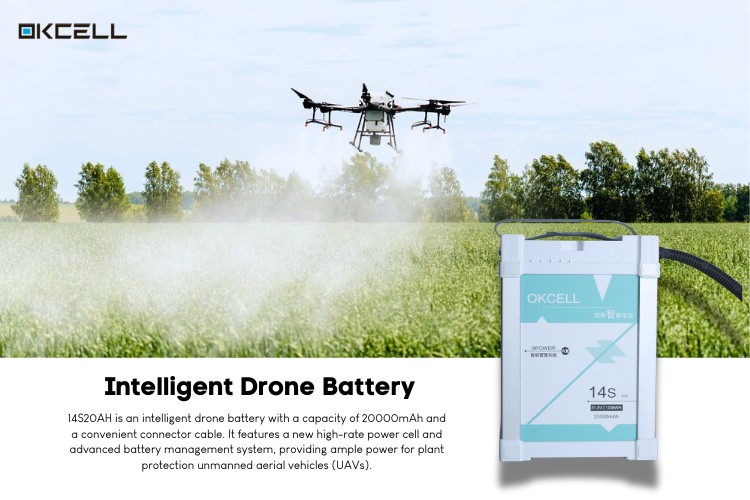
Drone batteries degrade in extreme temperatures. During summer, avoid exposure to the sun, and during winter, make sure to install insulation so that batteries are above 5°C. After flights, let the drone batteries cool down completely before recharging in order not to speed up chemical degradation and ensure that discharge performance will be continuously stable.
Balanced Charging
Professional balancing chargers or smart charging devices ensure that cell consistency is maintained within the batteries of an agricultural drone. In effect, avoiding overcharging and complete discharge will avoid cell imbalance, swelling, and capacity degradation, further enhancing the battery's life cycle and safety.
Daily Cleaning Maintenance
Agricultural environments with plenty of dust, moisture, and pesticides can easily corrode lithium battery casings and connectors. The agricultural drone battery and plug should be cleaned after every use so that the surface stays clear and clean from residual contents. Consistent cleaning prevents poor contact and structural damage; this will lead to long-term, stable performances of the batteries.
Periodic Battery Calibration
Each and every agricultural drone battery, after 20–25 cycles of charge and discharge, needs deep calibration: discharge to about 10% capacity before then recharging it completely. It will help the drone provide more accurate estimations of flying time, keep cell balance inside the lithium battery, and thus enhance stability and reliability during aerial operations.
Steady Flight Operations
Sudden maneuvering causes instantaneous voltage drops in the drone batteries of agricultural drones and puts additional stress on the lithium cells. Operations should be carried out in steady flight where possible, without sudden sharp turns or rapid ascents. This will protect not only the drone battery of the drone but also enhance consistency and quality in field spraying.
Timely Firmware Updates
The manufacturers of drones are releasing firmware updates continuously with the purpose of optimizing BMS. Keeping the firmware updated on both the drone and remote controller greatly enhances the thermal control strategy and charging logic of an agricultural drone's battery, thereby prolonging a lithium battery's service life and enhancing safety during operations.
What Are the Common Problems with Agricultural Drone Batteries
Human Casualties
With larger size and weight in agricultural drones, some solder joints may be loose or the connectors damaged because of pulling in wiring harnesses or casing squeezing during installation or removal. Poor contact can lead to power interruptions that affect flight stability. When handling lithium batteries, avoid forceful pulling and maintain natural cable bends to reduce structural fatigue and potential risks.
Chemical Corrosion
Pesticide droplets have a tendency to attach themselves rapidly onto drone battery surfaces during agricultural spraying operations. Some corrosive components cause casing, connector, or balancing port erosion and can create conditions for short circuits. Wipe lithium batteries immediately after the operation to avoid interaction of the chemical residues with moisture that could destroy the cell structures and accelerate aging.
Fast Charging Risks
Poor fast charging is the major cause of accelerated degradation in the drone batteries of agricultural drones. The charging current should not be too high, as this would heat up the lithium battery and may increase its internal resistance, which could lead to capacity reduction. This risk increases immediately after flight when the cells are warm, which is why rapid charging is so damaging. Ensure the use of a compatible smart balanced charger and charge only after the drone battery has cooled.
Hazards from Mixed Batches
Never mix drone batteries from different batches, health states, or of different internal resistances. Voltage mismatches cause 'back-feeding' with the creation of high-current surges that can degrade cells, cause swelling, or even result in mid-flight power failures. Agricultural drones require consistency in drone battery management in which cells are grouped together according to model, batch, and cycle count.
Full-Charge Storage
Long-term storage at full charge is the most common reason for swell in agricultural drone batteries. If the cells are left for days at full charge, they can build up gases or degrade irreversibly. The correct procedure is to maintain the voltage of individual cells within a range of 3.8-3.9V for storage and perform regular cycle calibration to extend life and stability.

When Should You Replace a Drone Battery
Abnormal Appearance
In case swelling, casing deformation, cracks, or leakage is obvious in an agricultural drone battery, then obviously the battery cells are damaged. They can even cause a short circuit or thermal runaway if further used. This kind of structural defect cannot be repaired. Stop using it immediately and recycle it in accordance with regulatory requirements to avoid flight accidents or safety hazards.
Damaged Connectors
A scorched, loose, or fractured plug on a drone battery, balance ports, or wiring harness can cause power interruptions or be poorly connected. Agricultural flights demand very stable power output. When any damage to connectors is observed, one should replace the lithium batteries with new ones to avoid sudden power loss during operation or a possible crash.
Performance Degradation
Any significant reduction of flight endurance, inability to realize even a single mission, very slow charging, or any voltage fluctuation shows that the battery cells are reaching their end of life. The lithium batteries with high cycle counts are more prone to capacity decline. This would require immediate replacement for maintaining operational efficiency.
Temperature Anomalies
If the battery overheats abnormally in normal flights or charging, or has irregular temperature spikes, that means an internal chemical imbalance or cell damage is happening. Agricultural applications mean very frequent high-load operations. The moment any temperature abnormality comes to light, immediately stop using the battery and replace it to avoid thermal runaway and its related dangers.
What Should You Do in Case of an Emergency
Immediately Disconnect Power
In abnormal conditions of smoke or fire on agricultural drone batteries either at charge or operations, the power supply should be immediately disconnected to avoid continuous electricity supply, increasing risks. After disconnection of the power supply, lithium batteries should not be handled with one's bare hands; wearing heat-resistant gloves or using insulated tools, the burning battery is to be moved to an open area while maintaining personnel safety.
Smother to extinguish
The drone batteries are lithium-based and require isolation in the air when ignited. You can achieve this by placing it in a bucket of sand that is fire-resistant or even laying it out on the ground, then covering it with fire-retardant cloth, sand, or soil. It is an ideal solution to sustain the cell combustion, minimizing highly the possibility of a fire spread, hence protecting equipment surrounding the scene.
Avoid Improper Fire Suppression Methods
Some intuitively use dry powder fire extinguishers, but dry powder causes corrosion and contaminates the equipment, and it is not suitable for lithium battery fire in agricultural drones. Carbon dioxide extinguishing may suppress the flames but needs to be applied along with air isolation methods for complete resolution.
Waste Disposal Procedures
Process the burned agricultural drone batteries or those that are completely damaged in strict accordance with the treatment of waste lithium batteries. Soak the battery in salt water for several dozen hours first and make sure to fully discharge it. When it has dried, carry out the work of recycling. Never throw away the batteries casually in order not to pollute the environment and bring about secondary hazards.
Conclusion
Only a stable and reliable agricultural drone battery can actually guarantee the continuation of the operation and a reduction in operational costs. Proper charging, discharging, and storage, including periodic inspections of a lithium battery, can help achieve maximum life and minimize unexpected failures that may lead to operational downtime. Following the maintenance principles as highlighted herein and paying close attention to detail, higher efficiency and safety in every future flight are maintained, hence assurance of more consistent performance for your operations.

点击右上角
分享给朋友吧







 Long by picture save/share
-

The Heart of Your Operation: A Complete Guide to the Agricultural Drone Battery
A deep dive into how agricultural drone batteries influence power, safety, flight time, and operational efficiency, offering essential insights on specs, maintenance, and choosing the right battery.
MORE -
How China Drone Battery Manufacturers Are Ensuring Quality and Safety
China’s drone battery manufacturers are raising industry standards through advanced engineering, strict safety controls, and reliable quality systems that ensure safer, longer, and more stable flight performance.
MORE -
Expert Guide to Agricultural Drone Battery Maintenance
Ensure safer, longer agricultural drone flights with practical battery maintenance guidance that helps prevent power loss, extend lifespan, and keep field operations efficient.
MORE -
What Are the Best Practices for Maximizing Drone Battery Performance
Maximizing drone battery performance starts with understanding how different missions stress power systems. Smarter charging, temperature control, and load management keep flights safer and longer.
MORE -
How to Charge a Drone Battery Safely and Effectively
Learn how to charge drone batteries safely and maximize performance with proper methods, smart charger choices, and essential practices that protect lifespan and flight reliability.
MORE -
Agricultural Drone Common Sense
Modern agricultural drones transform farming by enabling precise spraying, crop monitoring, and irrigation management, improving efficiency, sustainability, and smarter decision-making on farms.
MORE -
How Can Upgrading Your Drone Battery Improve Its Battery Life
Upgrading your drone battery can significantly extend flight time, stabilize power output, and improve reliability. Smarter chemistry and better design help every mission last longer and perform better.
MORE -
Essential Advice for Picking the Perfect Drone Battery
Discover how selecting the right drone battery impacts flight performance, efficiency, and reliability. Learn to match battery features with real-world needs for safe, stable, and long-lasting operation.
MORE -
How Custom Lithium Battery Packs Elevate UAV Performance
Custom lithium battery packs elevate UAV performance by extending flight time, enhancing stability, and ensuring safety, enabling drones to operate efficiently and reliably across demanding missions.
MORE -
Drone Battery Guide: Types, Safety, and Flight Time
Explore drone battery types, safety practices, and factors affecting flight time to maximize performance, extend lifespan, and ensure reliable operation for every mission.
MORE





Contact Us
With 18 years of extensive experience in battery production andcustomization, we have served thousands of clients. OKcell can providepersonalized one-stop customization services tailored exclusively for you.Contact us directly to explore our factory and products firsthand !
 Phone:+86 15093446331
 E-mail:sherry@izeron.com
 Address:Building 5, 5th Floor, 503, Yida Industrial Park Phase 1, Jinju Street, Zhengzhou High-tech Zone.
OKCELL Copyright © 2021 all rights reserved
Since 2005, with 18 years of dedication to custom battery manufacturing, supported by a team of 300 employees, multiple R&D centers, and 65 patented inventions, we are committed to becoming the world’s leading smart battery manufacturing service provider.
ABOUT COMPANY
CONTACT US
Email Address:
 :sherry@izeron.com
 :+86 15093446331
点击右上角
分享给朋友吧
OUR LOCATION
OKCELL is located at Building 5, 5th Floor, 503, Yida Industrial Park Phase 1, Jinju Street, Zhengzhou High-tech Zone.
OKCELL Copyright © 2021 All rights reserved
Technical Support:ShanHou