





The Heart of Your Operation: A Complete Guide to the Agricultural Drone Battery
Time: 2025-11-27 13:55:31
The agricultural drone has revolutionized precision farming, but its promise is directly tethered to its power source. A poorly performing or poorly managed battery cripples field operations, wastes expensive inputs, and erodes profitability. This guide goes beyond fundamental knowledge and deep-dives into the technology, specifications, and best practices of the agricultural sprayer drone battery that defines success. We will be going through everything from core drone battery technology to necessary drone battery maintenance to ensure you maximize the potential of each flight.
Anatomy of a Powerhouse: Decoding Agricultural Drone Battery Specifications
Not all batteries are created equal, and the extreme demands of lifting heavy payloads-gallons of pesticides, fertilizers, or seeds-often in challenging wind and weather conditions-require a specific and robust class of UAV battery. Understanding the numbers printed on the battery label is the first and most critical step to making an informed purchasing and operational decision.
Voltage and Cell Count: Power of an Engine
Voltage is the electrical potential driving your drone's motors. The higher voltage means more power and higher efficiency, which are non-negotiable for heavy-lift agricultural platforms. On a battery label, voltage will be represented by a number followed by 'S'. That 'S' rating refers to the number of individual battery cells connected in Series to achieve that total voltage.
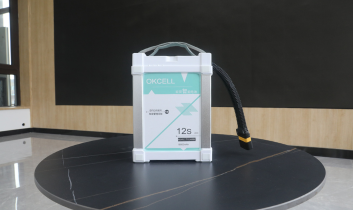
A common high-power standard for big agricultural drones is a 12S LiPo battery-a pack with 12 cells in series, typically producing 44.4V nominal. This configuration provides the raw power needed to lift payloads of 20, 30, or even 50 liters while maintaining stable flight control.
Capacity-mAh: Your Fuel Tank in the Sky
Capacity, usually measured in milliamp-hours (mAh), is the fuel tank of the battery. It gives a measure of how much energy a battery can store, which will obviously correlate directly to the potential life and flight duration for that drone battery. The larger the mAh value, the longer the possible flight time.
Yet capacity is a trade-off in weight. The more the capacity of the battery, the heavier it will be; eventually, all that additional weight begins to diminish returns in flight time. A 22000mAh drone battery is a frequent choice in the industry, offering a strong balance of energy density, manageable weight, and flight time for typical spraying and spreading missions.
C-Rating (Discharge Rate): Delivering Power on Demand
The C-Rating is probably the most misunderstood but critical specification relating to drone batteries. It defines the maximum rate at which the battery can safely be discharged without damage. It's a multiplier of the capacity of a given battery. A 22000mAh battery with a rating of 25C can, therefore, theoretically deliver 22 × 25 = 550 amps of power.
A high C-Rating is essential for agricultural drones. For high-demand maneuvers like taking off with a full tank, aggressive climbing, or high-output spraying, the motors draw immense current. If the C-Rating of a battery is too low, it cannot deliver this power, and it suffers from voltage sag, resulting in poor performance and possible unrecoverable damage to the battery cells.
Core Technology: LiPo, Smart Batteries, and the Future
But what really differentiates a reliable workhorse from a field liability is the chemistry and intelligence built into a battery pack. It's the internal components that determine performance, safety, and operating ease.
The Industry Standard: Why the LiPo Battery for Drone Applications Dominates
Lithium Polymer batteries, or LiPo, are the undisputed standard for virtually every high-performance drone. The chief advantage is an exceptional energy-to-weight ratio; thus, a lot of power can be stored in a light package, which is a perfect attribute for aviation.
This performance comes with responsibilities. Standard LiPo batteries are sensitive. They're prone to physical damage from drops, over-discharging (flying too long), overcharging, and improper storage temperatures. These are a core component of drone battery safety protocols, as a mishandled LiPo can swell, vent hazardous gas, or even catch fire.
The Next Evolution: The Rise of the Smart Battery for Drone Fleets
Smart batteries for drones are the next generation of batteries. At their very core, it's a high-quality LiPo battery; it's just enclosed with an integrated Battery Management System, or BMS. This on-board computer fundamentally changes the user experience and safety profile.
A BMS offers a number of benefits for professional fleet operators:
- Automatic Cell Balancing: Equalizes the voltage of all cells in the pack for significantly enhanced health and lifespan.
- Automatic Storage Discharge: In the case where a fully charged battery is left unused, the BMS will gradually discharge it to a safe storage voltage such as around 3.8V/cell to prevent degradation.
- Health Monitoring & Error Logging: The BMS monitors cycles, internal resistance, and temperature, thus providing a clear status of the battery health, as well as logging any fault events.
- Enhanced Safety: Provides hardware-level protection against over-charge, over-discharge, and short-circuit.
These features dramatically simplify fleet management, reduce the risk of costly human error, and provide invaluable data for maintenance planning.
Maximizing Uptime: The Professional's Guide to Drone Battery Maintenance and Charging
A battery's life is not a fixed number; it is a direct result of how it is treated. Proper drone battery maintenance is the single most important factor in protecting your investment, ensuring pilot safety, and guaranteeing operational readiness when you need it most.
The Golden Rules of Drone Battery Maintenance
Storage: This is paramount. The batteries must be stored at correct storage voltage, typically 3.80-3.85V per cell. Storing a LiPo fully charged for more than a few days causes rapid degradation. Store them in a cool, dry, fire-resistant location.
Temperature Control: Chemistry is sensitive to temperature. Never charge a battery that is hot from a flight or one that is cold from being stored in a vehicle overnight. Allow it to return to ambient room temperature first. Charging a hot or cold battery can cause permanent damage.
Physical Inspection: Before and after every flight, inspect each battery. Look for any signs of 'puffing' or swelling, dents in the casing, or damage to the wrapper or connectors. A damaged battery is a retired battery—no exceptions.
Cycle counting: keep a count of the number of charge/discharge cycles completed on each battery. As a battery ages, its internal resistance grows and its capacity to hold charge depletes; tracking cycles will help you expect this drop in performance and retire the batteries before they fail during a mission.
Charging Protocols for Safety and Longevity
Your charging setup is as important as the battery itself.
- Quality Charger: Buy a good quality, balancing charger for your drone batteries. The balancing capability is key; it ensures every individual cell within the battery pack is charged up to exactly the same voltage, which will prevent certain imbalances from degrading the pack over time.
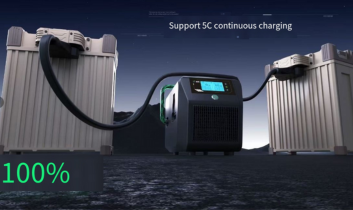
- Charge at a Safe Rate: The standard, safest charging rate is '1C'. For a 22000mAh battery, this would mean charging at 22 amps. Faster charging is possible, but it also creates more heat and puts additional stress on the chemistry of the battery, which reduces the overall lifespan.
- Create a Safe Charging Station: Never leave charging batteries unattended. Always charge on a fire resistant surface, such as a concrete floor or ceramic tile. Consider using a LiPo-safe charging bag or ammo can for an added layer of protection.
Actionable Techniques for Extending Drone Battery Life
- The key to extending drone battery life lies in following a few simple in-field rules:
- Avoid flying to 0% capacity. Set your drone's low-battery warning to land at a safe margin, usually 15-20% of remaining capacity.
- If running back-to-back missions, allow batteries to cool down for 15-20 minutes before placing them on the charger.
- For smart batteries, complete a full charge/discharge calibration cycle as suggested by the manufacturer (that is, every 50 cycles) to maintain the accuracy of the BMS.
The Financial Equation: Analyzing Drone Battery Price and Value
The cost of drone batteries accounts for a substantial percentage of the operational cost of your drone program. But this is an incorrect approach by only considering the price. What matters is the value and total cost of ownership.
What Influences the Cost
Capacity and Voltage: More cells, more active material translates to increased cost. A 12S 22000mAh battery will cost more than a 6S 10000mAh battery.
Smart Features: The sophisticated hardware and software of the BMS on a smart battery add upfront cost, which is often recovered through a longer life span, increased safety, and reduced labor for manual maintenance.
Brand reputation and quality control: Premium brands invest more in sourcing high-grade 'A-cells' and conducting rigorous testing. This commands a higher price but, for superior reliability with consistent performance, reduces the risks of premature failure.
Calculating the Total Cost of Ownership
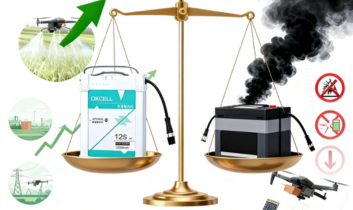
Position the battery purchase as an investment rather than an expense. A cheap, unbranded battery that only delivers 50 reliable cycles before failing is far more expensive in the long run than a premium battery that provides 150+ cycles with proper care.
More importantly, consider the cost of downtime. A single battery failure during a critical application window can cost more in lost time and opportunity than an entire high-quality battery costs. Reliability is value.
Conclusion: Powering the Future of Precision Agriculture
Contrary to the common perception, the agricultural drone battery is far more than just a simple power pack; it's a complex and very critical component since it dictates the efficiency, safety, and profitability of your entire aerial operation. It is only by knowing core drone battery specifications, embracing robust drone battery maintenance protocols, and investing in the right drone battery technology that you will be able to turn your drone from merely a tool into a strong, powerful, and profitable one. The future of farming is in the air, and it runs on well-managed power.

点击右上角
分享给朋友吧







 Long by picture save/share
-

The Heart of Your Operation: A Complete Guide to the Agricultural Drone Battery
A deep dive into how agricultural drone batteries influence power, safety, flight time, and operational efficiency, offering essential insights on specs, maintenance, and choosing the right battery.
MORE -
How China Drone Battery Manufacturers Are Ensuring Quality and Safety
China’s drone battery manufacturers are raising industry standards through advanced engineering, strict safety controls, and reliable quality systems that ensure safer, longer, and more stable flight performance.
MORE -
Expert Guide to Agricultural Drone Battery Maintenance
Ensure safer, longer agricultural drone flights with practical battery maintenance guidance that helps prevent power loss, extend lifespan, and keep field operations efficient.
MORE -
What Are the Best Practices for Maximizing Drone Battery Performance
Maximizing drone battery performance starts with understanding how different missions stress power systems. Smarter charging, temperature control, and load management keep flights safer and longer.
MORE -
How to Charge a Drone Battery Safely and Effectively
Learn how to charge drone batteries safely and maximize performance with proper methods, smart charger choices, and essential practices that protect lifespan and flight reliability.
MORE -
Agricultural Drone Common Sense
Modern agricultural drones transform farming by enabling precise spraying, crop monitoring, and irrigation management, improving efficiency, sustainability, and smarter decision-making on farms.
MORE -
How Can Upgrading Your Drone Battery Improve Its Battery Life
Upgrading your drone battery can significantly extend flight time, stabilize power output, and improve reliability. Smarter chemistry and better design help every mission last longer and perform better.
MORE -
Essential Advice for Picking the Perfect Drone Battery
Discover how selecting the right drone battery impacts flight performance, efficiency, and reliability. Learn to match battery features with real-world needs for safe, stable, and long-lasting operation.
MORE -
How Custom Lithium Battery Packs Elevate UAV Performance
Custom lithium battery packs elevate UAV performance by extending flight time, enhancing stability, and ensuring safety, enabling drones to operate efficiently and reliably across demanding missions.
MORE -
Drone Battery Guide: Types, Safety, and Flight Time
Explore drone battery types, safety practices, and factors affecting flight time to maximize performance, extend lifespan, and ensure reliable operation for every mission.
MORE





Contact Us
With 18 years of extensive experience in battery production andcustomization, we have served thousands of clients. OKcell can providepersonalized one-stop customization services tailored exclusively for you.Contact us directly to explore our factory and products firsthand !
 Phone:+86 15093446331
 E-mail:sherry@izeron.com
 Address:Building 5, 5th Floor, 503, Yida Industrial Park Phase 1, Jinju Street, Zhengzhou High-tech Zone.
OKCELL Copyright © 2021 all rights reserved
Since 2005, with 18 years of dedication to custom battery manufacturing, supported by a team of 300 employees, multiple R&D centers, and 65 patented inventions, we are committed to becoming the world’s leading smart battery manufacturing service provider.
ABOUT COMPANY
CONTACT US
Email Address:
 :sherry@izeron.com
 :+86 15093446331
点击右上角
分享给朋友吧
OUR LOCATION
OKCELL is located at Building 5, 5th Floor, 503, Yida Industrial Park Phase 1, Jinju Street, Zhengzhou High-tech Zone.
OKCELL Copyright © 2021 All rights reserved
Technical Support:ShanHou