





How to Charge a Drone Battery Safely and Effectively
Time: 2025-11-26 09:29:21
In any mission, be it aerial photography, surveying, or agricultural operations, batteries are central in ensuring flight safety and mission success. However, many users neglect proper charging practices. Poor charging habits lead to a reduction in battery life and insufficient flight time, not to mention the safety hazards. Here are some essential tips for smooth flights and prolonging the lives of your drone batteries
What Types of Battery Chargers Are Available
Basic Chargers
Generally speaking, conventional chargers are used for conventional devices, which can provide fixed current output with a simple structure but no intelligent management features. Such chargers cannot balance the cells in drone batteries, let alone LiPo batteries, or dynamically adjust the power input based on the status of the battery. They can thus only be applied to low-risk scenarios, and their use in professional drone missions or equipment for high-value aerial photography is not recommended.
Power Banks
These power banks are compact and portable, which enables combining them for an outdoor drone pilot to recharge low-power devices like remote controllers, tablets, and video transmission equipment. Most of the available power banks are limited in their output capacity, hence unsuitable for charging large-capacity drone battery packs directly. First, consider output power, compatibility with fast-charging protocols, and thermal protection when selecting a power bank to ensure it works reliably outdoors.
Solar Chargers
Solar-powered chargers convert sunlight to electrical energy, thus providing an environmentally friendly power supply for drone peripherals or low-capacity batteries. This is very suitable for long-hour outdoor operations. However, solar charging is extremely weather-dependent, with significant voltage fluctuations. Thus, solar chargers cannot be used as main chargers for LiPo batteries in drones. They work best when used with power stations that can produce more consistent current.

Portable Power Stations
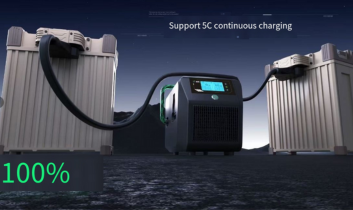
This makes portable power stations a very important piece of equipment for any pilot, mainly because they have a high-power output with multi-port compatibility and integrated safety protection to handle the charging needs of outdoor intelligent drone batteries. Fitted with inverters and a battery management system, they can deliver very stable power in professional settings, such as fast charging and multi-battery cyclic operations. OKCELL Portable Power Stations use the combination of high-rate lithium cells and an intelligent BMS for safely powering different types of drone batteries, thereby being an ideal outdoor energy solution for aerial photography and industrial users.
How Long to Charge a Drone Battery
The charging time for a drone's batteries depends on the capacity of the battery, charger power, and cell chemistry. Agricultural or commercial drones generally use batteries in the range from 5200mAh up to 22000mAh, each taking 45 to 90 minutes to get fully charged with a matched smart charger. This can be reduced to 30 to 60 minutes with high-power fast chargers while maintaining safety, provided the specified charging current and temperature limits set by the battery manufacturer are followed stringently.
Why Choosing the Right Battery Charger Is Important
The right intelligent drone battery charger is very important, as it directly impacts the lifespan, safety, and overall endurance performance of lithium batteries. Professional smart drone chargers correctly identify battery type, voltage, and capacity while delivering stable charging currents to prevent overheating, swelling, or capacity degradation. With the right charger, for high-frequency tasks such as agricultural spraying, inspection mapping, among others, flight times remain stable while operational efficiency is enhanced.
What safe charging practices are
Safety management plays a prime role in charging drone batteries. It goes without saying that batteries should be put in a cool, dry, well-ventilated area and kept out of the reach of direct sunlight and/or closed spaces that can cause lithium batteries to overheat. Furthermore, the temperature of the battery also needs to be monitored during charging to ensure that no abnormal heating occurs at the drone's cells; avoid long unattended charging. Besides this, the use of a smart charger, complete with overvoltage protection, thermal management, and cell balancing, effectively mitigates risks. Further, performing maintenance away from flammables and special equipment, such as fireproof bags, raises charging safety regarding the drone power systems.

Should You Let the Battery Cool Before Charging
Especially for LiPo batteries, drone batteries become hot after flying due to the high-load discharge in which the inner chemical reactions are more active. In this case, the immediate charging of a hot battery may result in cell swelling, speeding up aging, and even creating safety hazards. Therefore, it would be better to let the drone battery cool down naturally to about 25°C after flying before charging. This keeps the cells stable, prolongs the life cycle of the battery, and eliminates risks of overheating.
How to Avoid Overcharging
The drone batteries are very sensitive to overcharging, especially LiPo; once the voltage exceeds the safety range, the cells can swell, overheat, or even fail. To avoid overcharging, a smart charger with voltage management and power-off functions is highly recommended; in addition, without any delay, the power source should be disconnected once the charging is complete. Checking the status of drone battery cells from time to time can also reduce the possibility of damage caused by overcharging.
What the Correct Way to Store Batteries Is
Long-term storage of drone batteries should be about 50% storage voltage in order to extend cell life. Store them in a cool, dry, and well-ventilated place. Check LiPo cells for swelling or leakage before storage. Light charge/discharge cycles regularly can avoid capacity loss and performance drift due to long-term non-use.
How often should batteries be checked
The capacity and health status of drone batteries should be regularly checked. Due to safety considerations, LiPo batteries must be inspected before and after flying for swelling, leakage, or corrosion on the terminals. In conditions of long-term storage, voltage and capacity checks are done every one to two months to promptly find potential problems. Such periodic inspections not only maintain stable performance but also extend service life to ensure flight safety and the reliability of missions.
Conclusion
Safe and effective charging not only protects the batteries of drones but also greatly enhances the flying experience. In order to avoid overcharging, overheating, and damage, proper procedure, proper selection of equipment, and battery inspection or maintenance before and after charging are required. Scientific charging habits and regular maintenance can let drone batteries prolong service life while maintaining performance and thus provide stable and reliable power in aerial photography, surveying, and commercial use. They can ensure that every flight will be more efficient, safer, and worry-free.

点击右上角
分享给朋友吧







 Long by picture save/share
-

The Heart of Your Operation: A Complete Guide to the Agricultural Drone Battery
A deep dive into how agricultural drone batteries influence power, safety, flight time, and operational efficiency, offering essential insights on specs, maintenance, and choosing the right battery.
MORE -
How China Drone Battery Manufacturers Are Ensuring Quality and Safety
China’s drone battery manufacturers are raising industry standards through advanced engineering, strict safety controls, and reliable quality systems that ensure safer, longer, and more stable flight performance.
MORE -
Expert Guide to Agricultural Drone Battery Maintenance
Ensure safer, longer agricultural drone flights with practical battery maintenance guidance that helps prevent power loss, extend lifespan, and keep field operations efficient.
MORE -
What Are the Best Practices for Maximizing Drone Battery Performance
Maximizing drone battery performance starts with understanding how different missions stress power systems. Smarter charging, temperature control, and load management keep flights safer and longer.
MORE -
How to Charge a Drone Battery Safely and Effectively
Learn how to charge drone batteries safely and maximize performance with proper methods, smart charger choices, and essential practices that protect lifespan and flight reliability.
MORE -
Agricultural Drone Common Sense
Modern agricultural drones transform farming by enabling precise spraying, crop monitoring, and irrigation management, improving efficiency, sustainability, and smarter decision-making on farms.
MORE -
How Can Upgrading Your Drone Battery Improve Its Battery Life
Upgrading your drone battery can significantly extend flight time, stabilize power output, and improve reliability. Smarter chemistry and better design help every mission last longer and perform better.
MORE -
Essential Advice for Picking the Perfect Drone Battery
Discover how selecting the right drone battery impacts flight performance, efficiency, and reliability. Learn to match battery features with real-world needs for safe, stable, and long-lasting operation.
MORE -
How Custom Lithium Battery Packs Elevate UAV Performance
Custom lithium battery packs elevate UAV performance by extending flight time, enhancing stability, and ensuring safety, enabling drones to operate efficiently and reliably across demanding missions.
MORE -
Drone Battery Guide: Types, Safety, and Flight Time
Explore drone battery types, safety practices, and factors affecting flight time to maximize performance, extend lifespan, and ensure reliable operation for every mission.
MORE





Contact Us
With 18 years of extensive experience in battery production andcustomization, we have served thousands of clients. OKcell can providepersonalized one-stop customization services tailored exclusively for you.Contact us directly to explore our factory and products firsthand !
 Phone:+86 15093446331
 E-mail:sherry@izeron.com
 Address:Building 5, 5th Floor, 503, Yida Industrial Park Phase 1, Jinju Street, Zhengzhou High-tech Zone.
OKCELL Copyright © 2021 all rights reserved
Since 2005, with 18 years of dedication to custom battery manufacturing, supported by a team of 300 employees, multiple R&D centers, and 65 patented inventions, we are committed to becoming the world’s leading smart battery manufacturing service provider.
ABOUT COMPANY
CONTACT US
Email Address:
 :sherry@izeron.com
 :+86 15093446331
点击右上角
分享给朋友吧
OUR LOCATION
OKCELL is located at Building 5, 5th Floor, 503, Yida Industrial Park Phase 1, Jinju Street, Zhengzhou High-tech Zone.
OKCELL Copyright © 2021 All rights reserved
Technical Support:ShanHou