





Why Drone Batteries discharge While in Storage
Time: 2025-07-23 14:33:01
Drone battery power full put a few days to quickly drop power, is the battery bad? Drone batteries appear to have a significant decrease in power after being stored for only a few days after being fully charged, which makes many new flyers very worried, is it a bad battery?
Don't panic yet, it may be related to the following reasons:
Drone Battery Self-discharge Characteristics
The natural properties of lithium batteries: all drone lithium batteries in storage will occur when the natural discharge (passive self-discharge), which is caused by the internal chemical reaction of the battery inherent characteristics.
Smart drone batteries will consume power at a very low rate when stored, long-term storage if the power is too low (less than 10%) will lead to over-discharge, resulting in permanent damage.
Accelerated self-discharge when stored at full charge: Li-ion batteries have higher internal chemical activity in a fully charged state, resulting in a faster self-discharge rate.
If stored at full charge for a long period of time (more than 3 days), the battery performance will be accelerated due to the continuous active chemical reaction, resulting in a rapid decline in power.
Drone Battery Management System (BMS) Protection Mechanisms
Hibernation Mode Trigger: The BMS of some smart drone batteries will enter into hibernation mode to protect the battery cells when the charge level is too low or when they have not been used for a long period of time.
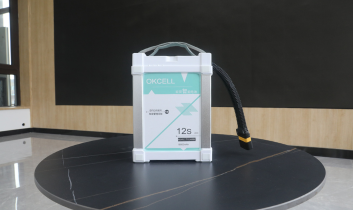
For example, if OKCELL batteries are stored for a long time without regular charging and discharging, the BMS may take the initiative to cut off the output, resulting in abnormal battery level display (e.g. sudden power loss).
Voltage balance problem: If the voltage difference between the cells in the battery pack is too large (e.g. more than 0.2V), the BMS may not be able to balance the power properly, resulting in a rapid drop in the overall voltage, which is manifested as a sudden drop in power.
Improper Storage Environment
Temperature impact: High temperature environment (e.g. over 40℃) will accelerate self-discharge, while low temperature (e.g. below 0℃) may increase the internal resistance of the battery, resulting in a false voltage drop (showing a decrease in power, which can be recovered after warming up). It is recommended that the storage environment temperature be controlled at 22-28℃ to avoid extreme temperatures.
Humidity and Ventilation: Humid environment may corrode drone battery contacts or circuits, interfering with the normal work of the BMS and indirectly leading to abnormal power level.
Drone Battery Aging or Damage
Excessive cycling: The cycle life of lithium batteries is usually 70-100 times of charging and discharging, after exceeding which the capacity and internal resistance will be significantly deteriorated, which is manifested by the discrepancy between the actual charge and the displayed value.
Damage to the battery cell: Overcharging, over-discharging, collision or long-term improper storage may lead to damage to the internal structure of the battery cell (e.g. crystallisation, bulging), which further accelerates self-discharge or capacity loss.
User Operation and Maintenance Mistakes
Failure to calibrate the battery regularly: Intelligent batteries need to be calibrated regularly (e.g., after every 20 cycles), otherwise the power calculation may be biased. The calibration method is to fully charge and discharge the battery and leave it to cool down.
Ignore storage charge recommendations: It is officially recommended to discharge to 40%-65% charge (third indicator light blinking) for long term storage and charge/discharge every 3 months to maintain activity. If stored at full charge for a long period of time, the battery may be at risk of over-discharge due to self-discharge.
Drone Battery Discharge Solutions and Suggestions
Correct Storage
When not in use for more than 10 days, discharge the battery to 40%-65% of its capacity and place it in a dry, cool environment.
Regular Maintenance
Perform a complete charge/discharge every 3 months to calibrate the battery and check the health status (e.g. number of cycles, cell voltage).
Environmental Control
Avoid high or low temperature environments, store with preheater or close insulation in winter, avoid direct sunlight in summer.
Check Battery Health
If there are frequent power abnormalities, you need to check the balance of the battery cells by professional tools (e.g. BQStudio) or contact the manufacturer for repair.
If the above measures are ineffective, the battery may be severely aged or the BMS is faulty, it is recommended to replace the battery with a new one or to seek professional repair.
About OKCELL Drone Battery
OKCELL Drone Battery was founded in 2005, focusing on the development, production and sales of drone batteries, which is a high and new technology enterprise which focuses on the R&D, manufacturing and sales of intelligent Li-ion battery module / Li-ion battery BMS management system. With 1,000 employees and multiple R&D centres. We can provide customers with personalized one-stop customization services to meet the special needs of different customers for UAV batteries.
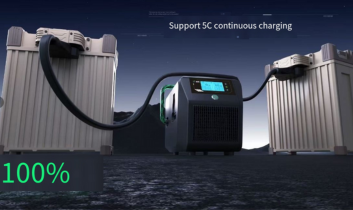
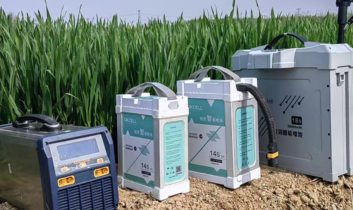
Wide range of products for a wide range of applications: 14S smart drone batteries specially tailored for small drones, which are compatible with a wide range of models; and Super 5C smart batteries, which are suitable for drones in the agricultural, logistics and industrial fields, such as 30,000mAh Super 5C smart batteries, which are able to maintain good performance in low-temperature environments.
As a leading global manufacturer of drone batteries. Our batteries are distributed to over 100 countries worldwide and comply with all major international certifications for Li-ion and LiPo batteries, ensuring product quality and safety for our global customer base. If you have any questions or needs, please feel free to contact us at WhatsApp: http://wa.me/8617729793469 .

点击右上角
分享给朋友吧







 Long by picture save/share
-

The Heart of Your Operation: A Complete Guide to the Agricultural Drone Battery
A deep dive into how agricultural drone batteries influence power, safety, flight time, and operational efficiency, offering essential insights on specs, maintenance, and choosing the right battery.
MORE -
How China Drone Battery Manufacturers Are Ensuring Quality and Safety
China’s drone battery manufacturers are raising industry standards through advanced engineering, strict safety controls, and reliable quality systems that ensure safer, longer, and more stable flight performance.
MORE -
Expert Guide to Agricultural Drone Battery Maintenance
Ensure safer, longer agricultural drone flights with practical battery maintenance guidance that helps prevent power loss, extend lifespan, and keep field operations efficient.
MORE -
What Are the Best Practices for Maximizing Drone Battery Performance
Maximizing drone battery performance starts with understanding how different missions stress power systems. Smarter charging, temperature control, and load management keep flights safer and longer.
MORE -
How to Charge a Drone Battery Safely and Effectively
Learn how to charge drone batteries safely and maximize performance with proper methods, smart charger choices, and essential practices that protect lifespan and flight reliability.
MORE -
Agricultural Drone Common Sense
Modern agricultural drones transform farming by enabling precise spraying, crop monitoring, and irrigation management, improving efficiency, sustainability, and smarter decision-making on farms.
MORE -
How Can Upgrading Your Drone Battery Improve Its Battery Life
Upgrading your drone battery can significantly extend flight time, stabilize power output, and improve reliability. Smarter chemistry and better design help every mission last longer and perform better.
MORE -
Essential Advice for Picking the Perfect Drone Battery
Discover how selecting the right drone battery impacts flight performance, efficiency, and reliability. Learn to match battery features with real-world needs for safe, stable, and long-lasting operation.
MORE -
How Custom Lithium Battery Packs Elevate UAV Performance
Custom lithium battery packs elevate UAV performance by extending flight time, enhancing stability, and ensuring safety, enabling drones to operate efficiently and reliably across demanding missions.
MORE -
Drone Battery Guide: Types, Safety, and Flight Time
Explore drone battery types, safety practices, and factors affecting flight time to maximize performance, extend lifespan, and ensure reliable operation for every mission.
MORE





Contact Us
With 18 years of extensive experience in battery production andcustomization, we have served thousands of clients. OKcell can providepersonalized one-stop customization services tailored exclusively for you.Contact us directly to explore our factory and products firsthand !
 Phone:+86 15093446331
 E-mail:sherry@izeron.com
 Address:Building 5, 5th Floor, 503, Yida Industrial Park Phase 1, Jinju Street, Zhengzhou High-tech Zone.
OKCELL Copyright © 2021 all rights reserved
Since 2005, with 18 years of dedication to custom battery manufacturing, supported by a team of 300 employees, multiple R&D centers, and 65 patented inventions, we are committed to becoming the world’s leading smart battery manufacturing service provider.
ABOUT COMPANY
CONTACT US
Email Address:
 :sherry@izeron.com
 :+86 15093446331
点击右上角
分享给朋友吧
OUR LOCATION
OKCELL is located at Building 5, 5th Floor, 503, Yida Industrial Park Phase 1, Jinju Street, Zhengzhou High-tech Zone.
OKCELL Copyright © 2021 All rights reserved
Technical Support:ShanHou