





A Detailed FAQs Guide to Drone Batteries
Time: 2025-11-11 15:52:38
From hobby drones to industrial and agricultural UAVs, drone batteries power them all. Proper charging, careful handling, and safe storage are critical for performance and longevity, not to mention safety. Understanding how the batteries work and adhering to best practices will ensure reliable flights, efficient operations, and consistent performance in rigorous environments.
How to Choose a Drone Battery
Picking the drone battery is a trade-off between power, weight, and compatibility. Note the voltage that would be required to give ample power to your drone motors without overloading them. Let the battery fit in the compartment of the drone and match the connector type for proper installation, ensuring safety.
Battery capacity will define how long your drone is going to be able to stay in the air, and while higher capacity means a longer flight, it usually adds more weight and may reduce performance. The C rating, or discharge rate, defines how much current the battery can safely deliver. Choose a battery that will fit your drone's power requirements, considering flight time and handling.
What Is a BMS and Why Need It
The Battery Management System is an intelligent electronic controller that governs the functionality of a battery. It supervises parameters like voltage, temperature, and current to ensure each cell operates within safety and effectiveness. BMS prevents problems associated with overcharge and overheating to maintain stability in performance and reduce the possibility of battery failure.
Besides ensuring safety, a BMS operates to optimize energy efficiency and extend a battery's service life. The BMS equalizes the cells for constant power output and efficiently calculates the remaining charge to prevent unexpected shutdowns. A reliable BMS will be crucial in maximizing power, safeguarding investment, and assuring dependable flight performance in the high-demand devices of drones.

How Long Does a Drone Battery Last
Drone battery endurance can range widely depending on its application, from 20- to 40-minute flying times for consumer drones, to 15-25 minutes for agricultural UAVs with their average heavy loads of sprays, and up to 30-50 minutes for industrial inspection drones operating on high-capacity lithium packs. Most lithium-polymer batteries retain their 200-300 charge cycles before falling below 80% efficiency. Proper charging and balanced storage combined with temperature control can double the useful lifespan.
How Can I Extend My Drone Battery's Life
Basic care and handling are key to extending the life of a drone battery. Try to avoid flying your drone in very extreme temperatures, and store your batteries between 40-60% charged. Agricultural drones fly for extended periods over fields and should rest their batteries after flights of extensive use, then recharge them with a compatible smart charger to avoid overheating.
Good charging practices are equally necessary for maintaining the health of the agricultural drone battery. Use only original or certified chargers, periodically perform balance charging to ensure that all cells are at the same voltage level, clean the terminals of the battery after a few flights to avoid dust and humidity build-up, especially in farming environments where humidity and dirt can shorten its life.
Why Do Drone Batteries Drain So Quickly
A drone's batteries get depleted so fast because it requires high power to lift the aircraft, stabilize, and maneuver. Agricultural drones use even more energy since they often carry liquid pesticides or granular fertilizers. Other causes for acceleration in battery drain include increased wind resistance, frequent changes in altitude, and continuous hovering while conducting the spraying operation.
The other important factor is the efficiency and age of the battery. In a LiPo cell, capacity degrades with every charge/discharge cycle, which results in flying times getting shorter. If a quadcopter has insufficiently developed cooling or operates for long under very hot conditions, then battery internal resistance increases, resulting in rapid power loss, thus decreasing its overall performance.
What Should I Do If My Drone Battery Swells
In the event of swelling or other serious battery damage, immediately stop using and carefully remove it from the drone. After removal, it should be taken to a non-flammable area away from heat or any metal objects. Swollen batteries run the risk of leaking chemicals or releasing gases that could cause safety hazards. Wear gloves and a mask when handling them; never puncture or compress the pack, but dispose of it at an authorized recycling or hazardous waste collection-never throw it in regular trash-to avoid fire or explosion.
Can I Use Any Charger to Charge My Drone Battery
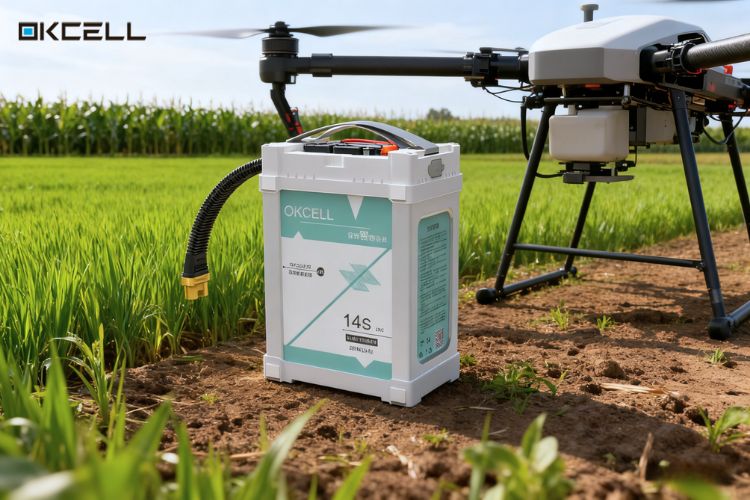
No, the wrong charger can badly damage your drone battery. Different batteries come with their respective charging voltages and current limits so that they not only remain safe but also provide good performance. Since agricultural drones usually use high-capacity LiPo or Li-ion packs, a smart charger with balance and temperature control is really a must-have for keeping each cell even and preventing overheating, really extending overall lifespan as much as possible.
Is It Safe to Charge Drone Batteries Overnight
It is generally not a good practice to leave drone batteries charging overnight; it is always advised to avoid this. The longer the charge, the more likely the chances of overheating and chemical imbalances inside the cells, affecting battery life and even causing a fire hazard. Even though most smart chargers have protection designed inside to safeguard against this, unexpected faults may happen along with power surges. It is better to charge during the day and to disconnect once full, regarding safety and the health of the battery.
How to Properly Charge Drone Batteries
Check for swelling or damage to your drone battery before charging, and after a flight, let the battery cool down to room temperature. Only use the charger recommended by the manufacturer to ensure voltage and current levels are appropriate. Balanced charging of LiPo batteries keeps each cell evenly powered, thus avoiding stress and prolonging the life span. Keep away from direct sunlight and flammable materials while charging to minimize overheating.
Agricultural and industrial drones require larger batteries, and those also call for more precise charging to maintain their reliability in the field. Always charge in a well-ventilated space and disconnect the moment an indicator shows full charge. Smart, two-channel chargers can save time while protecting battery health. In this respect, it's best to store batteries around 50–60% charged after use to preserve long-term efficiency and consistent performance during the next missions.
What Is the Best Practice for Storing Drone Batteries
Proper storage of batteries keeps drone batteries healthy and ready for future flights. Always store them at 40-60% charge in a cool, dry place away from direct sunlight. Never let a fully charged or completely dead battery sit for an extended period, as this will hasten the chemical degradation of the cells. Also, from a safety perspective, using a fireproof LiPo bag or non-conductive storage box greatly reduces risks and prevents accidental short circuits.
Regarding agricultural and industrial drones, with big-capacity LiPo or Li-ion batteries in common use, the stability of conditions becomes even more important. Storage temperatures should be maintained within a range of 15°C to 25°C, with monthly checks on the batteries for swelling or voltage drops. Rebalance or recharge as needed to maintain stability. Well-stored batteries achieve consistent flight performance, prolong service life, and guarantee safety during intensive operations.

点击右上角
分享给朋友吧







 Long by picture save/share
-

The Heart of Your Operation: A Complete Guide to the Agricultural Drone Battery
A deep dive into how agricultural drone batteries influence power, safety, flight time, and operational efficiency, offering essential insights on specs, maintenance, and choosing the right battery.
MORE -
How China Drone Battery Manufacturers Are Ensuring Quality and Safety
China’s drone battery manufacturers are raising industry standards through advanced engineering, strict safety controls, and reliable quality systems that ensure safer, longer, and more stable flight performance.
MORE -
Expert Guide to Agricultural Drone Battery Maintenance
Ensure safer, longer agricultural drone flights with practical battery maintenance guidance that helps prevent power loss, extend lifespan, and keep field operations efficient.
MORE -
What Are the Best Practices for Maximizing Drone Battery Performance
Maximizing drone battery performance starts with understanding how different missions stress power systems. Smarter charging, temperature control, and load management keep flights safer and longer.
MORE -
How to Charge a Drone Battery Safely and Effectively
Learn how to charge drone batteries safely and maximize performance with proper methods, smart charger choices, and essential practices that protect lifespan and flight reliability.
MORE -
Agricultural Drone Common Sense
Modern agricultural drones transform farming by enabling precise spraying, crop monitoring, and irrigation management, improving efficiency, sustainability, and smarter decision-making on farms.
MORE -
How Can Upgrading Your Drone Battery Improve Its Battery Life
Upgrading your drone battery can significantly extend flight time, stabilize power output, and improve reliability. Smarter chemistry and better design help every mission last longer and perform better.
MORE -
Essential Advice for Picking the Perfect Drone Battery
Discover how selecting the right drone battery impacts flight performance, efficiency, and reliability. Learn to match battery features with real-world needs for safe, stable, and long-lasting operation.
MORE -
How Custom Lithium Battery Packs Elevate UAV Performance
Custom lithium battery packs elevate UAV performance by extending flight time, enhancing stability, and ensuring safety, enabling drones to operate efficiently and reliably across demanding missions.
MORE -
Drone Battery Guide: Types, Safety, and Flight Time
Explore drone battery types, safety practices, and factors affecting flight time to maximize performance, extend lifespan, and ensure reliable operation for every mission.
MORE





Contact Us
With 18 years of extensive experience in battery production andcustomization, we have served thousands of clients. OKcell can providepersonalized one-stop customization services tailored exclusively for you.Contact us directly to explore our factory and products firsthand !
 Phone:+86 15093446331
 E-mail:sherry@izeron.com
 Address:Building 5, 5th Floor, 503, Yida Industrial Park Phase 1, Jinju Street, Zhengzhou High-tech Zone.
OKCELL Copyright © 2021 all rights reserved
Since 2005, with 18 years of dedication to custom battery manufacturing, supported by a team of 300 employees, multiple R&D centers, and 65 patented inventions, we are committed to becoming the world’s leading smart battery manufacturing service provider.
ABOUT COMPANY
CONTACT US
Email Address:
 :sherry@izeron.com
 :+86 15093446331
点击右上角
分享给朋友吧
OUR LOCATION
OKCELL is located at Building 5, 5th Floor, 503, Yida Industrial Park Phase 1, Jinju Street, Zhengzhou High-tech Zone.
OKCELL Copyright © 2021 All rights reserved
Technical Support:ShanHou