





Can you charge a drone battery overnight
Time: 2025-10-28 11:14:54
With the widespread use of drones for crop aerial shots, land surveys, logistics, and other purposes, battery usage and maintenance has become the users' most feared challenge. Most users wonder day and night: 'Are drone batteries chargeable at night?'
Face value-wise, overnight charging is time- and convenient-friendly. From the perspective of an employed person, however, the practice is in fact replete with underlying threats. In this article here, this subject matter will be explained at length through analysis of battery principles, safety risks, guard roles, and how to charge safely.
Why Do People Like 'Overnight Charging'
Most drone users fly their drones by day and charge the battery to a charger when they come home in the evening with dreams of flying again the next morning at wake-up time.
Although handy, this is not a safe way to deal with drones using lithium polymer or lithium-ion batteries if left unattended to charge over long periods.
Lithium batteries have voltage rise, internal temperature fluctuation, and electrochemical reaction when being charged. Charged for hours on end—already charged in the first place—the continuous electric current ruins the cells, which could lead it to heat or balloon.
Charging Principles of Drone Batteries
To determine whether overnight charging is feasible, one must first understand the structure and principles of drone batteries. Drones employ LiPo smart batteries primarily. During charging, the batteries possess in-built voltage balancing internally, such that the voltage of one cell never goes past the safety boundary (usually 4.2V or so).
There exist two stages of charging:
- Constant Current Stage: Voltage is raised step by step with constant current.
- Constant Voltage Stage: Voltage remains constant while current reduces progressively to achieve full charge.
Though it appears innocent, this process is very prone to temperature and voltage fluctuation. Inadequate ventilation, inductive charging facilities, or lower-quality batteries can cause abnormal reaction and lead to overheating or short circuiting.

Potential Risks of Overnight Charging
Overcharging Risk
Even with protection chips within the smart battery, overcharging can occur if chargers or cells are faulty.Overcharging not only reduces battery capacity, but internal gas growth and bulging, or explosions.
Fire Hazard due to Thermal Runaway
Night charging exposes drones to exponentially greater risk of 'thermal runaway.' With ongoing temperature build-up above critical temperatures, batteries trigger spontaneous combustion or explosion—a major reason for the majority of lithium-ion fires.
Reduced Battery Lifespan
The typical drone battery cycle lifespan is 300–500 charge cycles. Night charging has a more rapid degradation effect on electrochemical materials, lowers endurance, and drastically curtails flight times.
Can Smart Battery Protection Systems Solve the Problem
All but all drones currently on the market (e.g., DJI, EFT, XAG, etc.) are equipped with Smart Batteries.It incorporates an integrated BMS (Battery Management System) which constantly monitors voltage, current, and temperature and charges up automatically shutting off the charging current.Fact is overnight charging isn't safe.Three reasons as follow:
- Although BMS eliminates overcharging risk, it might fail under abnormal conditions.
- Extremely high ambient temperatures may compromise system judgment.
- Constant power connection for extended time periods continuously drains energy, overstressing the cells.
In brief, smart protection systems are great for protection but can't do away with human management alone.
Best Charging Practices for Safe Charging
To optimize battery life and ensure flight security, apply these expert charging practices:
Maintain Good Ventilation
Charge in ventilated areas at all times, and never in hot closed hot sun or direct sunlight areas. Ventilation avoids battery heat dissipation that leads to swelling or damage. Place batteries on a hard dry surface, away from sources of airflow direction like air conditioning vents. Proper airflow maximizes charging efficiency and reduces the danger of fire.
Use Original or Certified Chargers
Utilize original or authentic chargers that possess adequate voltage and current to prevent overcharging, heat production, or short circuit. Costly chargers destroy batteries and have safety issues. Better chargers contain temperature monitoring and overcharge defense and automatically turn off when charged to preserve battery life and usage safety.
Monitor During Charging
Do not charge unattended overnight. Check temperature and light indicator status regularly. Cut power at once if there is unusual heat, unusual odor, or swelling. Overnight unattended overcharging or constant charging for more than two hours is prohibited. Constant observation facilitates timely action if anomalies are found, avoiding accidents.

Use Explosion-Proof Bags or Fire-Resistant Boxes
Charge batteries in explosion-proof charging bags or fireboxes to inhibit fire spread and reduce damage in case of overheating and burning. These bags, constructed using flame-retardant material, also inhibit shrapnel from going airborne during explosion and are therefore a vital safety gear for drone pilots.
Turn power off immediately after full charge
Disconnect the power source once the battery has been charged in order to avoid extended standby. Overcharging leads to cell swelling, capacity loss, or even explosion. Develop the habit of 'unplugging on full charge.' For long-term storage, let the battery sit at around 50% charge to keep batteries fresh and perform consistently.
Develop Safe Charging Habits
Safe charging is a safe habit that will be around for a long time. By performing the above, risk can be reduced by 80%. Check battery condition and clean connectors regularly. Never charge batteries in series or for extended periods. Following the above good habits saves a lot of battery life, which translates into safer and more dependable flights.
Ideal Charging and Storage Conditions
Charge Temperature Range
Maintain the temperature during charging between 10°C–35°C. At low temperatures, chemical reaction efficiency is reduced, while heat leads to swelling or overheating of cells. Charging in this temperature ensures optimal efficiency and battery life. Our OKCELL intelligent drone batteries feature temperature-resistant design, ensuring consistent performance across environments.
Storage Voltage
When batteries are to be stored for extended periods, keep the charge level to 40%–60% (nominally 3.7V–3.9V per cell). This charge level keeps internal chemical reactions to a minimum, avoids over-discharge or over-charge, stabilizes cells, and preserves maximum performance to be used later.
Storage Environment
Store house batteries in a dry, shaded place out of direct sunlight and with no water. Heat accelerates the aging of batteries, and water causes corrosion of metals. Placing batteries in a closed dry cabinet or sealed container guarantees secure storage.
Regular Maintenance
For batteries that have been idle for long periods of time, carry out a 3-month charge-discharge cycle. This revives cells, maintains capacity, and re-balances voltages. Regular maintenance maintains battery health and provides stable endurance performance.
Good storage and charging habits are the key to extending the impressive endurance and stable flight of drones. Scientific temperature control, charge control, and maintenance extend battery life for more secure and effective flight missions.
Recommendations from Professional Battery Manufacturers
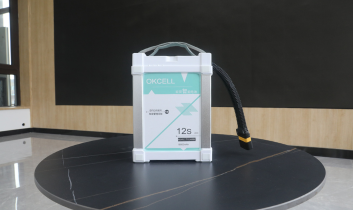
Being an expert drone battery manufacturer, all our OKCELL drone batteries undergo rigorous BMS safety tests and charge/discharge cycle certification. While our batteries are equipped with intelligent protection, we do not even recommend overnight charging.
The correct practice is:
- Set timed reminders when charging before bed or during work hours
- Use smart chargers that automatically cut power once fully charged
- For extended charging periods, pair with fire alarms or monitoring devices
Equipping batteries with best-class safety features and intelligent management software not only enhances lifespan but also provides more stable power support for your flight operations.
Conclusion: Convenience Is Not Safety—Correct Charging Is Necessary
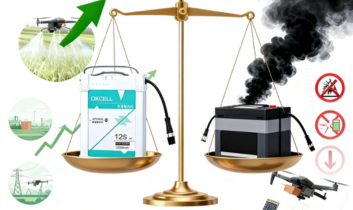
Leaving a drone to charge overnight may be convenient, but it is unsafe and not recommended on safety and longevity grounds. Even intelligent batteries with the best technology need to be charged in contained, safe locations.
Remember—
✅ Never unattended—safety always first
✅ Use good-quality batteries to make flying better;
✅ Scientific charging and storage doubles battery life.
If you require high-performance and high-safety drone battery solutions, contact OKCELL today---We offer customized power systems and technical services to assist in making every flight longer and safer.

点击右上角
分享给朋友吧







 Long by picture save/share
-

The Heart of Your Operation: A Complete Guide to the Agricultural Drone Battery
A deep dive into how agricultural drone batteries influence power, safety, flight time, and operational efficiency, offering essential insights on specs, maintenance, and choosing the right battery.
MORE -
How China Drone Battery Manufacturers Are Ensuring Quality and Safety
China’s drone battery manufacturers are raising industry standards through advanced engineering, strict safety controls, and reliable quality systems that ensure safer, longer, and more stable flight performance.
MORE -
Expert Guide to Agricultural Drone Battery Maintenance
Ensure safer, longer agricultural drone flights with practical battery maintenance guidance that helps prevent power loss, extend lifespan, and keep field operations efficient.
MORE -
What Are the Best Practices for Maximizing Drone Battery Performance
Maximizing drone battery performance starts with understanding how different missions stress power systems. Smarter charging, temperature control, and load management keep flights safer and longer.
MORE -
How to Charge a Drone Battery Safely and Effectively
Learn how to charge drone batteries safely and maximize performance with proper methods, smart charger choices, and essential practices that protect lifespan and flight reliability.
MORE -
Agricultural Drone Common Sense
Modern agricultural drones transform farming by enabling precise spraying, crop monitoring, and irrigation management, improving efficiency, sustainability, and smarter decision-making on farms.
MORE -
How Can Upgrading Your Drone Battery Improve Its Battery Life
Upgrading your drone battery can significantly extend flight time, stabilize power output, and improve reliability. Smarter chemistry and better design help every mission last longer and perform better.
MORE -
Essential Advice for Picking the Perfect Drone Battery
Discover how selecting the right drone battery impacts flight performance, efficiency, and reliability. Learn to match battery features with real-world needs for safe, stable, and long-lasting operation.
MORE -
How Custom Lithium Battery Packs Elevate UAV Performance
Custom lithium battery packs elevate UAV performance by extending flight time, enhancing stability, and ensuring safety, enabling drones to operate efficiently and reliably across demanding missions.
MORE -
Drone Battery Guide: Types, Safety, and Flight Time
Explore drone battery types, safety practices, and factors affecting flight time to maximize performance, extend lifespan, and ensure reliable operation for every mission.
MORE





Contact Us
With 18 years of extensive experience in battery production andcustomization, we have served thousands of clients. OKcell can providepersonalized one-stop customization services tailored exclusively for you.Contact us directly to explore our factory and products firsthand !
 Phone:+86 15093446331
 E-mail:sherry@izeron.com
 Address:Building 5, 5th Floor, 503, Yida Industrial Park Phase 1, Jinju Street, Zhengzhou High-tech Zone.
OKCELL Copyright © 2021 all rights reserved
Since 2005, with 18 years of dedication to custom battery manufacturing, supported by a team of 300 employees, multiple R&D centers, and 65 patented inventions, we are committed to becoming the world’s leading smart battery manufacturing service provider.
ABOUT COMPANY
CONTACT US
Email Address:
 :sherry@izeron.com
 :+86 15093446331
点击右上角
分享给朋友吧
OUR LOCATION
OKCELL is located at Building 5, 5th Floor, 503, Yida Industrial Park Phase 1, Jinju Street, Zhengzhou High-tech Zone.
OKCELL Copyright © 2021 All rights reserved
Technical Support:ShanHou