





Semi-Solid State Battery vs. Lithium-Ion Battery
Time: 2025-09-25 11:10:07
Introduction
Among numerous battery technologies, lithium-ion batteries continue to dominate due to their maturity and widespread adoption. However, semi-solid batteries, as an emerging technology, are progressively demonstrating unique advantages, particularly in the domains of high safety and high energy density, exhibiting strong development potential. This paper will comprehensively compare semi-solid batteries with lithium-ion batteries, assisting users in gaining a clearer understanding of the characteristics, strengths, weaknesses, and application prospects of both battery types.

What is a Semi-solid-state Battery?
A semi-solid-state battery represents an innovative energy storage technology positioned between conventional lithium-ion batteries and solid-state batteries. It employs a semi-solid electrolyte (typically a gel or slurry), differing both from the liquid electrolyte found in lithium-ion batteries and the fully solid electrolyte used in solid-state batteries.
The advantages of this design include:
Higher energy density: Capable of storing more energy within the same volume.
Enhanced safety: The semi-solid electrolyte offers superior stability, significantly reducing risks of electrolyte leakage, short circuits, and explosions.
Substantial application potential: Particularly suited for electric vehicles, drones, and high-end energy storage applications.
Semi-solid batteries are regarded as a crucial transitional form in future battery development, combining the safety of solid-state batteries with the maturity of lithium-ion technology.
What is a lithium-ion Battery?
Lithium-ion batteries (Li-ion) are the most common type of rechargeable battery, storing and releasing energy through the migration of lithium ions between the positive and negative electrodes. Due to their high energy density, lightweight nature, and rapid charging capabilities, lithium-ion batteries are virtually ubiquitous:
Consumer electronics: smartphones, laptops, tablets.
Industrial and transport: drones, electric vehicles, power tools.
Energy storage systems: Domestic photovoltaic storage, grid-scale energy storage.
As a mature battery technology, lithium-ion batteries offer significant advantages in cost, supply chain stability, and industrial-scale production.

Advantages and Disadvantages of Semi-solid Batteries
Advantages of Semi-solid Batteries
Higher energy density: Compared to traditional lithium batteries, semi-solid batteries deliver enhanced endurance.
Greater safety: Reduced risk of thermal runaway, less prone to explosion from high temperatures or impact.
Longer cycle life: More stable electrolytes reduce side reactions, increasing cycle endurance.
Structural flexibility: Adaptable to diverse battery designs, better suited for high-performance devices.
Disadvantages of Semi-solid Batteries
Higher cost: The supply chain remains immature, with raw materials and manufacturing processes commanding premium prices.
Challenging mass production: Technical bottlenecks persist in large-scale manufacturing.
Limited market penetration: Most remain in R&D or pilot phases, with restricted application scenarios.
Advantages and Disadvantages of Lithium-ion Batteries
Advantages of Lithium -ion Batteries
Technological maturity: Widely adopted with high market recognition.
High energy density: Meets the lightweight and extended range requirements of drones and electric vehicles.
Rapid charging: Suited to the fast-paced consumer electronics market.
Low self-discharge rate: Retains significant charge after prolonged storage.
Well-established supply chain: Relatively controllable costs, with straightforward replacement and maintenance.
Disadvantages of Lithium -ion Batteries
Safety concerns: Flammable liquid electrolyte poses thermal runaway risks.
Poor environmental adaptability: Significant performance degradation in extreme temperatures.
Heavy environmental burden: Production involves rare metals, while end-of-life battery recycling presents considerable challenges.
Semi-Solid-State Batteries VS. Lithium-Ion Batteries
Performance
From a performance perspective, semi-solid batteries and traditional lithium-ion batteries each possess distinct advantages.
In terms of energy density, semi-solid batteries generally exhibit slightly higher values than lithium-ion batteries. This means they can store more electrical energy within the same volume or weight, thereby extending device operating time or increasing vehicle range. This characteristic is particularly crucial for energy-intensive applications such as electric vehicles or long-endurance drones.
Regarding cycle life, semi-solid batteries demonstrate superior performance. Their unique materials and electrolyte systems enable them to maintain high capacity and stability after repeated charge-discharge cycles, reducing the need for frequent battery replacement and lowering long-term usage costs.
Regarding charging speed, the current gap between the two is negligible, with little discernible difference in the user's daily experience. However, as solid-state battery technology continues to be optimised and developed, semi-solid-state batteries still hold potential for further improvement in fast-charging capabilities.
Safety
Safety stands as one of the most critical metrics in battery selection.
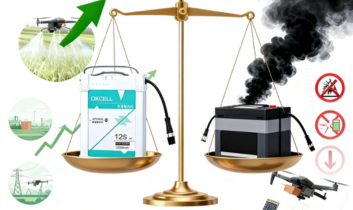
Lithium-ion batteries utilise liquid electrolytes. While highly mature and widely adopted, these electrolytes pose significant safety risks—being prone to combustion or even explosion under conditions such as high temperatures, physical impact, or overcharging.
Semi-solid batteries, conversely, employ gel-like electrolytes. This material demonstrates superior stability and heat resistance, substantially reducing the risk of fire or explosion. For sectors demanding stringent safety standards, such as electric vehicles and large-scale energy storage systems, the advantages of semi-solid batteries become even more pronounced.
Environmental Impact
With the growing emphasis on green energy and sustainable development, the environmental footprint of batteries has come under increasing scrutiny.
Semi-solid batteries hold a distinct advantage in environmental friendliness. Their electrolytes are more readily recyclable, and the overall manufacturing and recycling processes exert relatively less pressure on the environment, contributing to reduced carbon emissions and resource wastage.
In contrast, lithium-ion batteries consume substantial energy during production and face significant challenges in recycling. Improper handling can easily contaminate soil and water resources. Consequently, within the trend towards low-carbon and circular economies, semi-solid batteries are viewed as possessing greater developmental potential.

Application Scenarios
Distinct differences exist in the application domains of different battery types.
Lithium-ion batteries, owing to their mature technology and relatively lower cost, remain the mainstream choice. They are extensively utilised in smartphones, laptops, drones, and other consumer electronics, covering most daily battery requirements.
Semi-solid batteries, however, are better suited for future applications demanding high safety and energy density. As the technology matures, they will play an increasingly significant role in the electric vehicle market, while also being applicable to drones requiring extended flight times and energy storage devices with stringent safety requirements. With expanding applications, they are poised to occupy a more pivotal position within the next generation of energy systems.
How to Select the Right Battery?
In practical applications, users often find themselves perplexed about battery selection. Below are key reference metrics:

Voltage: Must match the device requirements. For instance, drones commonly utilise 3S or 4S lithium battery packs.
Capacity (mAh): Higher capacity translates to longer operational duration.
Energy Density (Wh/kg): Particularly crucial for weight-sensitive devices like drones.
Cycle Life: Prioritise longer-lasting batteries for prolonged usage scenarios.
Safety: Semi-solid batteries offer advantages in high-temperature or extreme environments.
Cost and Supply Chain: Lithium-ion batteries remain the most economical and readily available option.
For example:
Racing drones → High-discharge-rate lithium polymer (LiPo) batteries.
Aerial surveying drones → High-energy-density lithium-ion batteries.
Future electric drones → Semi-solid-state batteries (balancing extended endurance with high safety).
Conclusion
Overall, lithium-ion batteries remain the prevailing choice, with their mature supply chain and lower costs maintaining their dominance in consumer electronics and the drone market. However, semi-solid batteries are rapidly gaining prominence. Leveraging superior safety and energy density, they are poised to occupy a significant position in electric vehicles, energy storage systems, and the drone sector where stringent safety requirements prevail.
For users, selecting batteries should not involve blindly chasing novelty, but rather aligning with specific application requirements: in the short term, lithium-ion batteries remain the optimal choice; in the long term, semi-solid-state batteries will pioneer new avenues for the energy sector.

点击右上角
分享给朋友吧







 Long by picture save/share
-

The Heart of Your Operation: A Complete Guide to the Agricultural Drone Battery
A deep dive into how agricultural drone batteries influence power, safety, flight time, and operational efficiency, offering essential insights on specs, maintenance, and choosing the right battery.
MORE -
How China Drone Battery Manufacturers Are Ensuring Quality and Safety
China’s drone battery manufacturers are raising industry standards through advanced engineering, strict safety controls, and reliable quality systems that ensure safer, longer, and more stable flight performance.
MORE -
Expert Guide to Agricultural Drone Battery Maintenance
Ensure safer, longer agricultural drone flights with practical battery maintenance guidance that helps prevent power loss, extend lifespan, and keep field operations efficient.
MORE -
What Are the Best Practices for Maximizing Drone Battery Performance
Maximizing drone battery performance starts with understanding how different missions stress power systems. Smarter charging, temperature control, and load management keep flights safer and longer.
MORE -
How to Charge a Drone Battery Safely and Effectively
Learn how to charge drone batteries safely and maximize performance with proper methods, smart charger choices, and essential practices that protect lifespan and flight reliability.
MORE -
Agricultural Drone Common Sense
Modern agricultural drones transform farming by enabling precise spraying, crop monitoring, and irrigation management, improving efficiency, sustainability, and smarter decision-making on farms.
MORE -
How Can Upgrading Your Drone Battery Improve Its Battery Life
Upgrading your drone battery can significantly extend flight time, stabilize power output, and improve reliability. Smarter chemistry and better design help every mission last longer and perform better.
MORE -
Essential Advice for Picking the Perfect Drone Battery
Discover how selecting the right drone battery impacts flight performance, efficiency, and reliability. Learn to match battery features with real-world needs for safe, stable, and long-lasting operation.
MORE -
How Custom Lithium Battery Packs Elevate UAV Performance
Custom lithium battery packs elevate UAV performance by extending flight time, enhancing stability, and ensuring safety, enabling drones to operate efficiently and reliably across demanding missions.
MORE -
Drone Battery Guide: Types, Safety, and Flight Time
Explore drone battery types, safety practices, and factors affecting flight time to maximize performance, extend lifespan, and ensure reliable operation for every mission.
MORE





Contact Us
With 18 years of extensive experience in battery production andcustomization, we have served thousands of clients. OKcell can providepersonalized one-stop customization services tailored exclusively for you.Contact us directly to explore our factory and products firsthand !
 Phone:+86 15093446331
 E-mail:sherry@izeron.com
 Address:Building 5, 5th Floor, 503, Yida Industrial Park Phase 1, Jinju Street, Zhengzhou High-tech Zone.
OKCELL Copyright © 2021 all rights reserved
Since 2005, with 18 years of dedication to custom battery manufacturing, supported by a team of 300 employees, multiple R&D centers, and 65 patented inventions, we are committed to becoming the world’s leading smart battery manufacturing service provider.
ABOUT COMPANY
CONTACT US
Email Address:
 :sherry@izeron.com
 :+86 15093446331
点击右上角
分享给朋友吧
OUR LOCATION
OKCELL is located at Building 5, 5th Floor, 503, Yida Industrial Park Phase 1, Jinju Street, Zhengzhou High-tech Zone.
OKCELL Copyright © 2021 All rights reserved
Technical Support:ShanHou