





What is the Reason for the High Cost of Drone Batteries
Time: 2025-07-22 10:46:54
UAVs are widely used in aerial photography, surveying and mapping, agricultural plant protection and other fields due to their flexibility and manoeuvrability. However, the high price of batteries behind them often discourages users. What are the factors that lead to the high cost of UAV batteries? Next, we will analyse the performance requirements, safety systems, production processes, market losses and other dimensions, to explore the root causes of the high price of drone batteries.
Drone Battery High Performance Requirements
High Energy Density and Lightweight Contradiction
UAV Drones need to overcome their own gravity to fly, the drone battery must be balanced between capacity and weight. and polymer lithium batteries through special materials (such as high nickel electrodes) to achieve the same capacity under the same light weight [energy density exceeded 400Wh/kg], but the cost of a significant increase.
For example, DJI's 5800mAh battery has an energy of 89Wh, far exceeding that of a rechargeable battery of the same size (70Wh), yet it only supports a 30-minute flight, demonstrating the limitations of the energy density and discharge efficiency required. This difference stems from the stringent standards for mass power density (kW/kg) in aerospace applications: consumer-grade drones require ≥3kW/kg, while electric vehicles only require 0.3kW/kg].
Ultra-high Rate Discharge Capability
Drones need instant power boost from hovering to acceleration (e.g. 10C-150C discharge rate) Take mainstream 6S battery pack as an example, instant power demand can reach more than 8kW, which can't be met by ordinary batteries (1C-5C).
High-multiplier drone batteries require special electrode processes (e.g., coating technology). Using 5μm-level ultra-thin collector plating and low internal resistance design, keeping internal resistance below 3mΩ, with production costs 30%-50% higher than conventional batteries. This design results in a steeper discharge curve: during rapid acceleration, the voltage drop needs to be controlled within 15% of the nominal value, whereas it may be more than 30% for conventional batteries.
Drone Battery Safety and Durability Standards
Power Management Algorithms
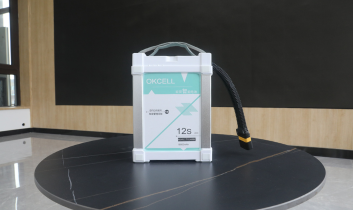
Intelligent flight batteries from OKCELL and other manufacturers integrate charging and discharging protection, temperature monitoring and self-discharge functions [including 12 layers of protection architecture.
For example, it automatically discharges to 60% when a full charge is put on hold to extend its life , precisely controlling the discharge threshold through a Coulomb counting chip, with an error of<0.5%], and this type of system is similar to the simplified version of Tesla's BMS.
But with the addition of a barometric pressure compensation module to adapt to changes in elevation, with the cost of development apportioned to the selling price of the battery. Each flight drone battery is equipped with an MCU chip with a processing speed of 48MHz, which is 6 times faster than the control chip of an ordinary rechargeable battery.
Multiple Hardware Protection
Drone atteries have built-in temperature sensors, NTC thermistor arrays with ±1°C accuracy and short-circuit protection circuits, including self-recovery overcurrent protection elements to prevent the risk of overheating caused by rapid discharge.
The number of electronic components in a drone battery is more than 3 times that of a rechargeable battery. Typical configuration contains 32 discrete components vs. 9-12 in a rechargeable battery. The protection system needs to withstand 20G impact acceleration, in line with MIL-STD-810G military standards.
Production Process and Material Costs
Application of Lithium Cobalt Oxide or Silicon Carbon Anode Materials
High rate drone batteries need to use lithium cobalt oxide or silicon carbon anode and other high-priced materials. Lithium cobalt oxide price of $ 28/kg, is three times the lithium iron phosphate. Besides, electrode preparation requires precision slitting and stacking process. Lug welding precision requirements ± 0.1mm, the need to use laser welding equipment, the yield rate is lower, the pass rate of about 83% vs. 95% of the power battery. Electrolyte needs to add additives such as fluorinated ethylene carbonate (FEC), which increases the cost by 15%.
Small Batch Customised Production
Diversified drone battery models (e.g. PL853060 specifications) [more than 200 non-standard sizes exist in the industry], high cost of moulding and production line adjustments [$15,000 for a single model], unable to dilute the cost of 18650 batteries through scale [annual production of 18650 exceeds 3 billion cells, while the annual production of high-end drone batteries is less than 5 million sets]. The utilisation rate of production equipment is only 55%, far lower than 85% of consumer electronic batteries.
Market and Wear and Tear Factors
Rapid Depletion Pushes up the Replacement Frequency
Frequent high-load operation makes the UAV battery life only about 200 cycles (capacity retention rate of 80% for the retirement standard), much lower than the 500 times of the rechargeable treasure (capacity retention rate of 60% can still be used), the user needs to be replaced frequently [professional surveying and mapping users replace an average of 3-4 groups of batteries per year]. Deep discharge (DoD) up to 90% of the use of the scenario, than 40% DoD scenarios life 60% shorter].
Brand Premium and R&D Apportionment
Head manufacturers DJI include flight control algorithm R&D costs in the price of batteries. Drone battery price includes 15%-20% R&D amortisation, while high-end models need to match specific structural designs. For example, the curved battery compartment of the Mavic 3 requires customised coiled batteries. The drone battery certification costs account for 8%, and need to pass multiple certifications such as UN38.3, FCC, CE, etc..
Conclusion
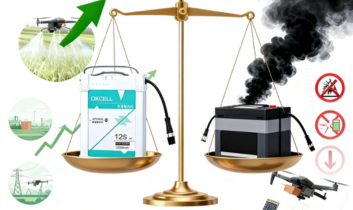
The high price of drone batteries is the result of the joint action of technical barriers and market demand, and its core value lies in achieving a balance between reliability and performance under extreme working conditions. In the future, with the development of solid-state battery technology, the cost may be expected to reduce, but aviation-grade safety standards will still maintain a high premium.
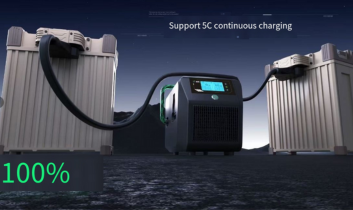
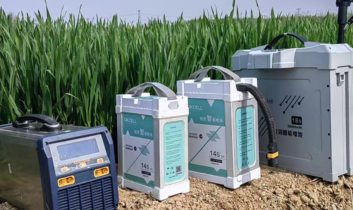
If you're searching for a drone battery to stand the trial of time and charge rapidly, OKCELL 18S 30000mAh is the proper answer, which is a rechargeable droen Lithium battery ideal for high power flight applications. They are the immediate substitution for lead-acid batteries. If you’re interested in buying or custom drone batteries, then you have come to the right place. Continue reading to find who makes and where to buy or custom super 5C drone batteries. Email us: okcell@izeron.com.

点击右上角
分享给朋友吧







 Long by picture save/share
-

The Heart of Your Operation: A Complete Guide to the Agricultural Drone Battery
A deep dive into how agricultural drone batteries influence power, safety, flight time, and operational efficiency, offering essential insights on specs, maintenance, and choosing the right battery.
MORE -
How China Drone Battery Manufacturers Are Ensuring Quality and Safety
China’s drone battery manufacturers are raising industry standards through advanced engineering, strict safety controls, and reliable quality systems that ensure safer, longer, and more stable flight performance.
MORE -
Expert Guide to Agricultural Drone Battery Maintenance
Ensure safer, longer agricultural drone flights with practical battery maintenance guidance that helps prevent power loss, extend lifespan, and keep field operations efficient.
MORE -
What Are the Best Practices for Maximizing Drone Battery Performance
Maximizing drone battery performance starts with understanding how different missions stress power systems. Smarter charging, temperature control, and load management keep flights safer and longer.
MORE -
How to Charge a Drone Battery Safely and Effectively
Learn how to charge drone batteries safely and maximize performance with proper methods, smart charger choices, and essential practices that protect lifespan and flight reliability.
MORE -
Agricultural Drone Common Sense
Modern agricultural drones transform farming by enabling precise spraying, crop monitoring, and irrigation management, improving efficiency, sustainability, and smarter decision-making on farms.
MORE -
How Can Upgrading Your Drone Battery Improve Its Battery Life
Upgrading your drone battery can significantly extend flight time, stabilize power output, and improve reliability. Smarter chemistry and better design help every mission last longer and perform better.
MORE -
Essential Advice for Picking the Perfect Drone Battery
Discover how selecting the right drone battery impacts flight performance, efficiency, and reliability. Learn to match battery features with real-world needs for safe, stable, and long-lasting operation.
MORE -
How Custom Lithium Battery Packs Elevate UAV Performance
Custom lithium battery packs elevate UAV performance by extending flight time, enhancing stability, and ensuring safety, enabling drones to operate efficiently and reliably across demanding missions.
MORE -
Drone Battery Guide: Types, Safety, and Flight Time
Explore drone battery types, safety practices, and factors affecting flight time to maximize performance, extend lifespan, and ensure reliable operation for every mission.
MORE





Contact Us
With 18 years of extensive experience in battery production andcustomization, we have served thousands of clients. OKcell can providepersonalized one-stop customization services tailored exclusively for you.Contact us directly to explore our factory and products firsthand !
 Phone:+86 15093446331
 E-mail:sherry@izeron.com
 Address:Building 5, 5th Floor, 503, Yida Industrial Park Phase 1, Jinju Street, Zhengzhou High-tech Zone.
OKCELL Copyright © 2021 all rights reserved
Since 2005, with 18 years of dedication to custom battery manufacturing, supported by a team of 300 employees, multiple R&D centers, and 65 patented inventions, we are committed to becoming the world’s leading smart battery manufacturing service provider.
ABOUT COMPANY
CONTACT US
Email Address:
 :sherry@izeron.com
 :+86 15093446331
点击右上角
分享给朋友吧
OUR LOCATION
OKCELL is located at Building 5, 5th Floor, 503, Yida Industrial Park Phase 1, Jinju Street, Zhengzhou High-tech Zone.
OKCELL Copyright © 2021 All rights reserved
Technical Support:ShanHou