





What Is a Drone Battery Management System
Time: 2025-07-21 14:37:49
Introduction
In the field of UAVs, the battery management system (BMS) is of vital importance. It is like the ‘power butler’ of UAVs, playing a key role in ensuring UAV flight safety, enhancing performance, and extending battery life. So what exactly is a drone battery management system? And how does it work? In this article, we will discuss these issues in depth and unveil the mystery of UAV battery management system for you.

Key Components of UAV Battery Management System
Battery Monitoring
Significance of Monitoring Parameters:Continuous monitoring of the voltage, temperature and current of each battery cell is the basic function of the battery management system. The voltage reflects the battery's power status, the temperature concerns the safety and performance of the battery, and the current reflects the charging and discharging of the battery. By grasping these parameters in real time, the battery management system can be keenly aware of any potential problems.
The Role of Real-Time Monitoring:Real-time drone battery monitoring is indispensable for efficiently managing power consumption. It helps UAVs to reasonably allocate power during flight to avoid flight interruptions due to excessive power consumption. At the same time, it is also an important means of ensuring flight safety, and timely detection of battery abnormalities can prevent dangerous situations from occurring.
Cell Balancing
The Concept of Cell Balancing:In lithium polymer (LiPo) battery packs, cell balancing is a key function. Due to the subtle differences in the battery manufacturing process and different working conditions during use, the performance of each cell in the battery pack will gradually appear different. Cell balancing is to ensure that the charging and discharging state of each cell is as consistent as possible.
Impact on Battery Health:Without cell balancing, weaker cells will age and break down faster than others. The cell balancing function can effectively maintain the overall health of the UAV's battery, prolong the battery's service life, and ensure stable performance of the UAV during flight, avoiding flight instability due to cell differences.
Protection Mechanisms
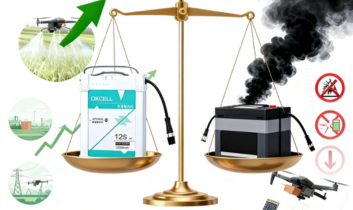
List of Protection Functions:A well-designed UAV battery management system is equipped with a variety of protection mechanisms, including overheating protection, overcharging protection, and short-circuit protection. These protection mechanisms are like installing a multi-layer ‘shield’ for the battery.
Responding to Dangerous Situations and Adapting to the Environment:Overheating may trigger the battery to burn or even explode, overcharging will seriously damage the battery life and pose a safety hazard, and short-circuiting may instantly release a large amount of energy and cause damage to the equipment. These protection mechanisms of the battery management system can effectively avoid the occurrence of these dangerous situations and ensure that the battery management system solution can operate stably in harsh field environments and other conditions.
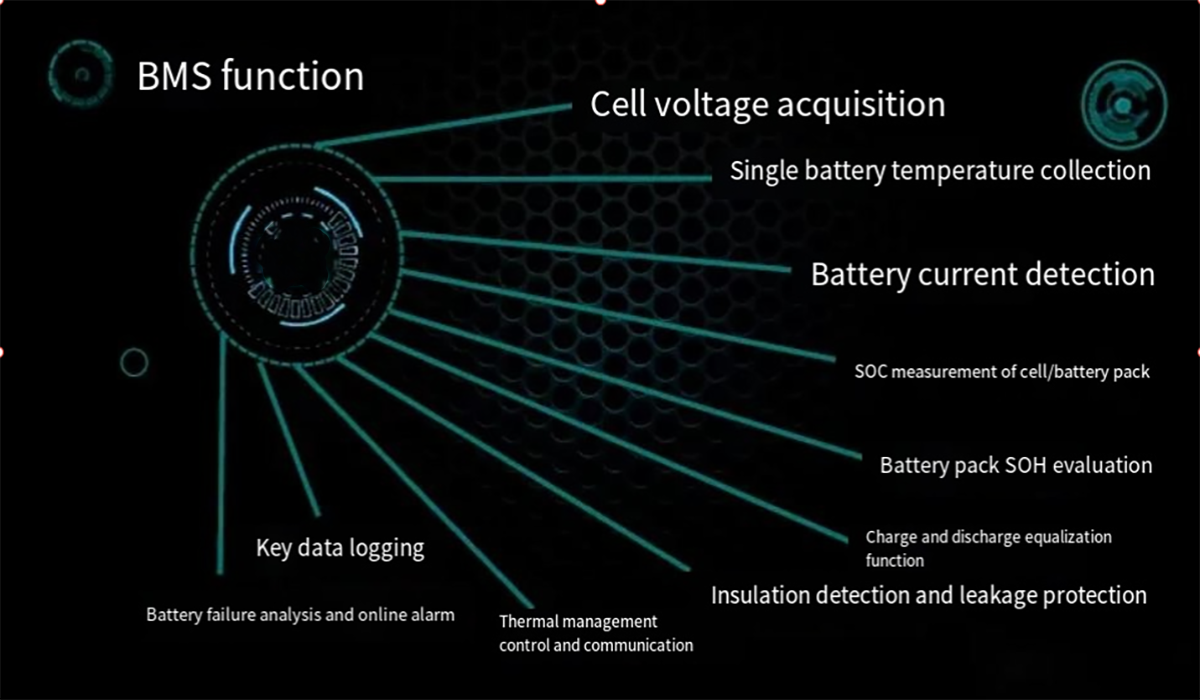
How Do Battery Management Systems Work
Overall Design Considerations
There is no uniform standard for battery management system (BMS) design, and its technology and functionality are affected by multiple factors. Including the cost of the battery pack, complexity, size, battery application scenarios on the safety, life, warranty requirements, as well as the certification needs of various government regulations. For example, cost constraints may determine the choice of components; military applications of battery safety requirements far beyond the ordinary civilian.
Battery Pack Protection Management
Electrical protection
Current protection: Monitoring battery pack and cell voltage and current is the key to electrical protection. The electrical safety operation area of the battery cell is limited by current and voltage, and the BMS protects the battery by preventing it from exceeding the manufacturer's rated value. Lithium-ion battery cell charging and discharging current limits are different, the BMS will set the maximum continuous current, but also to deal with such sudden changes in current such as rapid acceleration of electric vehicles, monitoring the peak current and adjusting it as needed, not only to prevent short-circuiting and other extreme conditions, but also to tolerate a reasonable high peak current.
Voltage protection: Li-ion batteries need to operate within a specific voltage range, and the BMS is aware of the limits and makes decisions based on how close they are to the threshold. Close to the high voltage limit, the BMS may reduce the charging current, and stop charging when it reaches the limit, and at the same time, consider the voltage hysteresis to prevent control oscillation; close to the low voltage limit, the BMS requires key loads to reduce the current, such as electric cars to reduce the torque of traction motors, and give priority to the driver's safety when safeguarding the safety of the batteries.
Thermal Management Protection
Temperature impact: the capacity of lithium-ion batteries decreases at low temperatures due to the slowing down of the chemical reaction rate, and charging at temperatures below 0°C can lead to damage to the battery from lithium metal plating. The BMS controls the temperature of the battery pack through heating and cooling, and the scheme is determined according to the size of the battery pack, cost, performance targets and geographical area.
Heating: Heating can be drawn from an external AC power source or from a backup battery, or from the main battery pack if the heater has a low current draw. The thermoliquid system uses an electric heater to heat the coolant and then deliver it. Engineers can also turn on the power electronics within the BMS to assist in heating.
Cooling: Cooling is critical to reducing the performance loss of lithium-ion batteries. High temperatures can significantly reduce battery performance and life. Cooling is divided into passive and active, passive rely on air flow, such as electric car driving airflow, but also through the wind speed sensor to optimise; active use of fans or hot liquid system, BMS monitor the temperature, adjusted through the valve, to maintain the optimal performance of the battery temperature.
Capacity Management
Importance: Effective management of battery pack capacity is extremely critical to the BMS, otherwise the battery is prone to failure. The performance of the cells in the battery pack will be different due to self-discharge, charge/discharge cycle, temperature, aging and other factors.
Cell imbalance: The voltage is determined by the series connection of the cells in the battery pack, and the mismatch of the cells causes charging problems. Balanced cells can synchronise cut-off when charging; when unbalanced, some cells reach the limit first, and the bottom cell cannot be filled.
BMS Management Mode
SOC function: State of Charge (SOC) reflects the battery power, BMS achieves capacity management by balancing SOC of each battery cell. SOC can not be measured directly, and it depends on various techniques to estimate, and the balancing scheme is divided into passive and active. 2.
Passive balancing: passive balancing is easy to implement, so that the charging capacity of each cell is consistent with the weakest cell. When charging, low current is used to transfer energy from high SOC cells, and the BMS uses transistor switch and discharge resistor to guide excess current from top to bottom to ensure that each cell can be charged to the maximum SOC.
Which Drones Require Batteries with a BMS?
Industrial and Enterprise Drones
These drones are commonly used in critical infrastructure inspection, agricultural operations and public safety. In these application scenarios, the reliability and safety of the drone is critical. For example, when inspecting critical infrastructures such as power lines, a faulty battery could cause the drone to crash, which not only damages the equipment, but could also lead to serious safety incidents. Therefore, they require robust battery management systems to guarantee successful mission execution and flight safety.
Long-endurance UAVs
Long-endurance UAVs, like those used for surveillance or distribution, need to stay in the air for a longer period of time. An optimised battery management system is essential to maximise their flight range. By properly managing the charging and discharging process of the battery, it ensures that the battery is always in the best working condition, thus extending the range of the UAV to meet the needs of long flights.
Heavy Transport UAV
When carrying heavy loads, heavy transport UAVs need stable voltage output to ensure smooth flight. The battery management system can effectively regulate the voltage to prevent flight instability caused by voltage fluctuations, ensuring safe and reliable operation of the UAV under heavy load conditions.
UAVs with High-voltage Battery Packs
UAVs with high-voltage battery packs are more prone to the problem of cell imbalance due to the larger number of cells connected in series. The imbalance of the battery cells may lead to a decrease in battery performance, a shorter lifespan, or even a potential safety hazard. Therefore, this type of UAV needs a battery management system to ensure the safe and efficient operation of the battery.
How to Build a Safer and Reliable UAV Power System
The Impact of Battery Weight
First, the optimal battery type needs to be determined for flight applications. Unlike fixed equipment, large, heavy batteries are not good for powering aircraft. Excessively heavy batteries consume too much energy to maintain the lift and speed of the aircraft, cancelling out the advantages of the energy they provide.
Selecting the Right Battery
Therefore, determining the right battery starts with finding the chemistry and battery form that will produce the best performance solution. At Inventus Power, for example, they work with their customers to determine the ideal chemistry and form factor required for the intended application and discuss the various trade-offs the customer may need to consider. For UAV applications where battery weight can impact performance, they may recommend lithium polymer cells because of their high energy / weight ratio and greater flexibility in size compared to cylindrical or prismatic cells. However, the trade-off for this choice lies in the mechanical design of the cell, which needs to take into account possible mechanical and thermal issues. Depending on the design criteria, cylindrical and prismatic cells may also be used.
What are the Main functions of BMS for Drone Batteries?
Voltage / Current Monitoring
By tracking individual cell voltages and overall currents, the battery management system is able to effectively prevent overcharging or overdischarging of the battery. Overcharging may cause the battery to heat up, expand or even explode, while over-discharging will shorten the battery life. Accurate voltage and current monitoring provides a guarantee for safe charging and discharging of the battery.
Cell Balancing
The cell balancing function ensures that the state of charge of each cell in the battery pack is uniform, avoiding degradation of the battery capacity due to differences between cells. Long-term unbalanced cells will cause the performance of the entire battery pack to deteriorate, while cell balancing can maintain the consistency of the battery pack and prolong the service life of the battery.
Thermal Management
The thermal management function prevents the battery from overheating or overcooling by monitoring the battery temperature. Overheating will accelerate battery aging and even cause safety accidents; overcooling will reduce battery performance. The battery management system maintains the battery temperature within a suitable range by controlling the heating or cooling device.
State of Charge (SOC) Estimation
The State of Charge (SOC) Estimation function predicts the remaining charge of the battery, similar to the fuel gauge of a car. This function helps the user to understand the endurance of the UAV, so as to reasonably arrange flight missions and avoid flight interruptions due to insufficient power.
Protection Circuit
The protection circuit is an important line of defence for the battery management system, which can guard against short-circuit, over-current and other faults. Short-circuit and over-current may instantly generate a large amount of heat, damage to the battery or even cause a fire, the protection circuit can quickly cut off the circuit to protect the battery and equipment safety.
Fault Detection
Battery management system also has a fault detection function that can identify problems such as loose connections or internal short circuits. Timely detection and resolution of these problems can help ensure the reliable operation of the UAV and reduce the occurrence of flight accidents.

Smart Energy Solutions for Extended Flight Time
Energy Efficient Flight Paths
Drone manufacturers use special algorithms to plan energy efficient flight paths. These paths can reduce energy consumption and enable drones to fly longer distances. Energy-efficient flight paths play an important role in long-distance missions, such as large-area mapping and environmental monitoring, by optimising flight trajectories and improving energy efficiency.
Solar-assisted and Hybrid Systems
The emergence of solar-powered drones has been a game changer. Equipped with solar panels, they are capable of collecting sunlight and converting it into electricity to provide additional power to the UAV. Hybrid systems, on the other hand, combine both battery and solar energy sources to further extend the flight time of the drone. This means that the UAV can stay in the air for a longer period of time, reducing the need for frequent recharging, which is particularly suitable for scenarios that require long periods of continuous operation.
Reducing Power Wastage in Flight
Reducing Common Sources of Energy Wastage
Minimising energy loss is essential for extending UAV flight time. Common sources of energy waste, such as inefficient propellers and unnecessary weight, can be addressed by selecting high-quality, lightweight components. Using efficient propellers improves propulsion efficiency and reduces energy loss, while reducing the weight of the UAV reduces energy
consumption during flight.
Reducing No-load Power Consumption and Optimising Aerodynamics
Reducing no-load power consumption during flight is also an important part of the process. For example, optimising motor settings during periods of low activity reduces unnecessary energy consumption. In addition, improved aerodynamics, such as the use of a streamlined fuselage design and optimised propeller parameters, can significantly reduce flight drag and the amount of energy required to maintain flight. Together, these strategies can help maximise battery life and ensure that the UAV operates more efficiently.
How to Maximizing a UAV Battery Management System
UAV battery management systems play a critical role in maximising UAV flight time. Integrating a UAV battery management system with 12S batteries is key to achieving this goal. By accurately monitoring battery performance, the battery management system ensures that the drone performs at its maximum potential while protecting the battery from damage.
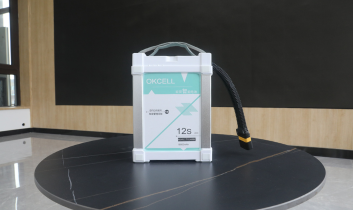
OKCELL drone batteries integrates advanced management systems into customised UAV battery packs. These systems make flight more efficient.

点击右上角
分享给朋友吧







 Long by picture save/share
-

The Heart of Your Operation: A Complete Guide to the Agricultural Drone Battery
A deep dive into how agricultural drone batteries influence power, safety, flight time, and operational efficiency, offering essential insights on specs, maintenance, and choosing the right battery.
MORE -
How China Drone Battery Manufacturers Are Ensuring Quality and Safety
China’s drone battery manufacturers are raising industry standards through advanced engineering, strict safety controls, and reliable quality systems that ensure safer, longer, and more stable flight performance.
MORE -
Expert Guide to Agricultural Drone Battery Maintenance
Ensure safer, longer agricultural drone flights with practical battery maintenance guidance that helps prevent power loss, extend lifespan, and keep field operations efficient.
MORE -
What Are the Best Practices for Maximizing Drone Battery Performance
Maximizing drone battery performance starts with understanding how different missions stress power systems. Smarter charging, temperature control, and load management keep flights safer and longer.
MORE -
How to Charge a Drone Battery Safely and Effectively
Learn how to charge drone batteries safely and maximize performance with proper methods, smart charger choices, and essential practices that protect lifespan and flight reliability.
MORE -
Agricultural Drone Common Sense
Modern agricultural drones transform farming by enabling precise spraying, crop monitoring, and irrigation management, improving efficiency, sustainability, and smarter decision-making on farms.
MORE -
How Can Upgrading Your Drone Battery Improve Its Battery Life
Upgrading your drone battery can significantly extend flight time, stabilize power output, and improve reliability. Smarter chemistry and better design help every mission last longer and perform better.
MORE -
Essential Advice for Picking the Perfect Drone Battery
Discover how selecting the right drone battery impacts flight performance, efficiency, and reliability. Learn to match battery features with real-world needs for safe, stable, and long-lasting operation.
MORE -
How Custom Lithium Battery Packs Elevate UAV Performance
Custom lithium battery packs elevate UAV performance by extending flight time, enhancing stability, and ensuring safety, enabling drones to operate efficiently and reliably across demanding missions.
MORE -
Drone Battery Guide: Types, Safety, and Flight Time
Explore drone battery types, safety practices, and factors affecting flight time to maximize performance, extend lifespan, and ensure reliable operation for every mission.
MORE





Contact Us
With 18 years of extensive experience in battery production andcustomization, we have served thousands of clients. OKcell can providepersonalized one-stop customization services tailored exclusively for you.Contact us directly to explore our factory and products firsthand !
 Phone:+86 15093446331
 E-mail:sherry@izeron.com
 Address:Building 5, 5th Floor, 503, Yida Industrial Park Phase 1, Jinju Street, Zhengzhou High-tech Zone.
OKCELL Copyright © 2021 all rights reserved
Since 2005, with 18 years of dedication to custom battery manufacturing, supported by a team of 300 employees, multiple R&D centers, and 65 patented inventions, we are committed to becoming the world’s leading smart battery manufacturing service provider.
ABOUT COMPANY
CONTACT US
Email Address:
 :sherry@izeron.com
 :+86 15093446331
点击右上角
分享给朋友吧
OUR LOCATION
OKCELL is located at Building 5, 5th Floor, 503, Yida Industrial Park Phase 1, Jinju Street, Zhengzhou High-tech Zone.
OKCELL Copyright © 2021 All rights reserved
Technical Support:ShanHou