





How Long Does a Agricultural Drone Battery Last
Time: 2025-07-15 11:10:52
Nowadays, the use of agricultural spraying drones has become one of the greatest innovations. Drones have revolutionized agriculture by spraying accurately, monitoring crop and analysing soil. As flight time directly affects operational efficiency, these advances rely heavily on the reliability and service life of drone batteries. In this article we will explore the field of agricultural drone batteries.
The Application of Drones in the Field of Agriculture
Crop Monitoring: One use of drone images is to check plant health. Drones that carry sensors or cameras that can detect the growth status of crops, diseases and pests in real time, helping farmers manage their fields scientifically.
Spray Application: Drone sprayers are able to reach areas that are difficult for humans to reach, such as steep tea fields at high altitudes. Drone sprayers make people avoid carrying knapsack type sprayer in the fields, which could be harmful to their health. Drones can carry medicine boxes and spraying equipment to accurately spray pesticides, fertilizers or herbicides to improve operational efficiency and reduce costs and manpower investment.
Agricultural Planning: Drone field monitoring is also used to monitor the health of soil and field conditions, and can provide accurate field mapping, including elevation information. By rapidly acquiring the surface information, farmers can reasonably plan farmland layout and planting structure.
How to Choose Agricultural Drone Battery
Because agricultural drones need to operate for a long time, choosing the right drone battery is critical to maximize drone performance and ensure its safe operation. The choice depends on factors such as flight time, weight, compatibility and durability. Below, we will help you understand how to choose a drone battery through key factors.
Battery Capacity
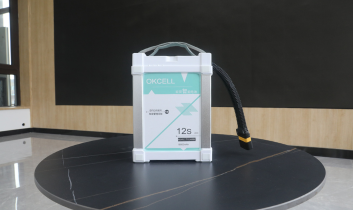
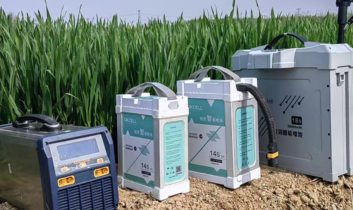
The battery capacity is measured in milliampere hours (mAh), which directly affects the battery life of the drone. The higher the capacity, the longer the flight time, but the battery weight also increases. For agricultural drones that need to operate for a long time, especially for tasks such as spraying and mapping, high-capacity batteries should be preferred to balance energy requirements and payload efficiency. The rated capacity of our products is 300000mAh and the maximum continuous discharge current is 210A, which can fully meet the above task requirements.
Compatibility
Some brands have unique battery management systems (BMS) that display capacity and temperature (such as our products), which may limit compatibility with other brands’ drones. Using an incompatible battery could damage your drone.A drone battery with a capacity of 5,000mAh can support 20-30 minutes of flight, depending on the payload and environmental conditions.
Always check the drone’s specifications and make sure the drone battery matches its voltage, capacity, and connector type.
Battery Specification
Voltage rating: Ensure that the voltage matches with the motor requirements of the drone to avoid inefficiency
C rating (discharge rate) : A higher C rating can support more demanding tasks such as spraying, but may add weight.
Connectors: Different drone brands use different connector specifications, so make sure it’s compatible with your device.
Balance Cost with Long-term Durability
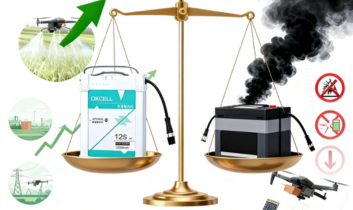
Although cost is also a factor about affecting the flight time, durability and performance often justify that investing in high-quality batteries is valuable. Cheaper batteries may have a shorter life or erratic performance, leading to more frequent replacement and potentially downtime. For our products, under the condition of 70% discharge deep cycle use, cycle life is more than 1000 times. High-quality agricultural drone batteries typically have safety features such as overcharge protection, thermal management, and enhanced cycle life.
Optimize the Weight-energy Ratio of the Payload
The drone’s overall performance may be impacted by the weight of the battery. Because agricultural drone battery applications sometimes entail hefty payloads like liquid sprayers or sensors, heavier batteries limit flexibility and flight time.
To maximize performance without compromising flight time, look for lightweight batteries with a high energy density, such as lithium polymer (LiPo) batteries.

Factors that Affect the Flight Time of Drones
Battery Capacity
The total capacity of a drone’s battery is the key in determining maximum time. However, balancing battery size with the drone’s design is crucial. Simply put, the bigger the battery, the heavier the drone. Heavier drones are more likely to experience a drop in aerodynamic efficiency and flight time. Therefore, choosing a quality battery is crucial.
Weather Condition
The flight performance of drones is largely dependent on weather conditions, especially wind speed and direction. Changes in humidity and temperature may also affect the battery performance and the stability of electronic components of the drone. The discharge efficiency of the battery will decrease under the high humidity environment, which results flight time become shorter.
In addition, extreme temperatures(too high or too low) can affect the normal function of the drone’s batteries and increase the risk of failure. Our batteries’ low temperature performance is good, in the case of -20℃ ambient temperature 5C discharge, discharge capacity is more than 70%.
Just as a drone’s range and flight time will extend if keep downwind, keeping upwind can also affect flight time. In this case, the drone needs to consume more power to maintain course and speed, which drains the battery more quickly.
Mode of Operation
How the operator operates the drone is an important factor about affecting flight time. Agile maneuvering, frequent changes in altitude or speed, and constant movement in different directions all increase energy consumption, because these operations require more power from the drone’s propulsion system.
The flight patterns built into the drone’s software also affect energy use. For example, many drones have a hover mode, which uses more power than moving at a steady speed because the extra lift is required to maintain a stationary position.
Load Weight
Any additional weight (including battery weight) affects flight time. That’s because heavier drones require more lift to stay airborne, which uses up more battery power. In practice, this means that adding heavy-duty cameras, sensors, or other equipment dramatically reduces the flight time of a drone before it needs to be recharged.

Agricultural Drone Battery Life
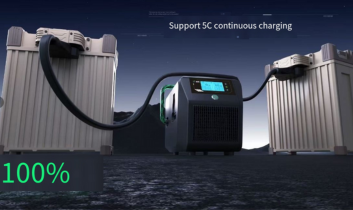
Our products own long cycle life. Cycle life is more than 1000 times under the condition of 70% discharge depth cycle use.And also support 5C continuous charging and the maximum 10C discharge, to provide strong power for the UAV.
Drone batteries are the backbone of any agricultural drone’s performance, the right choice of drone batteries can not only save money, but also ensure effectiveness, if you need further instructions or other details, please contact us!

点击右上角
分享给朋友吧







 Long by picture save/share
-

The Heart of Your Operation: A Complete Guide to the Agricultural Drone Battery
A deep dive into how agricultural drone batteries influence power, safety, flight time, and operational efficiency, offering essential insights on specs, maintenance, and choosing the right battery.
MORE -
How China Drone Battery Manufacturers Are Ensuring Quality and Safety
China’s drone battery manufacturers are raising industry standards through advanced engineering, strict safety controls, and reliable quality systems that ensure safer, longer, and more stable flight performance.
MORE -
Expert Guide to Agricultural Drone Battery Maintenance
Ensure safer, longer agricultural drone flights with practical battery maintenance guidance that helps prevent power loss, extend lifespan, and keep field operations efficient.
MORE -
What Are the Best Practices for Maximizing Drone Battery Performance
Maximizing drone battery performance starts with understanding how different missions stress power systems. Smarter charging, temperature control, and load management keep flights safer and longer.
MORE -
How to Charge a Drone Battery Safely and Effectively
Learn how to charge drone batteries safely and maximize performance with proper methods, smart charger choices, and essential practices that protect lifespan and flight reliability.
MORE -
Agricultural Drone Common Sense
Modern agricultural drones transform farming by enabling precise spraying, crop monitoring, and irrigation management, improving efficiency, sustainability, and smarter decision-making on farms.
MORE -
How Can Upgrading Your Drone Battery Improve Its Battery Life
Upgrading your drone battery can significantly extend flight time, stabilize power output, and improve reliability. Smarter chemistry and better design help every mission last longer and perform better.
MORE -
Essential Advice for Picking the Perfect Drone Battery
Discover how selecting the right drone battery impacts flight performance, efficiency, and reliability. Learn to match battery features with real-world needs for safe, stable, and long-lasting operation.
MORE -
How Custom Lithium Battery Packs Elevate UAV Performance
Custom lithium battery packs elevate UAV performance by extending flight time, enhancing stability, and ensuring safety, enabling drones to operate efficiently and reliably across demanding missions.
MORE -
Drone Battery Guide: Types, Safety, and Flight Time
Explore drone battery types, safety practices, and factors affecting flight time to maximize performance, extend lifespan, and ensure reliable operation for every mission.
MORE





Contact Us
With 18 years of extensive experience in battery production andcustomization, we have served thousands of clients. OKcell can providepersonalized one-stop customization services tailored exclusively for you.Contact us directly to explore our factory and products firsthand !
 Phone:+86 15093446331
 E-mail:sherry@izeron.com
 Address:Building 5, 5th Floor, 503, Yida Industrial Park Phase 1, Jinju Street, Zhengzhou High-tech Zone.
OKCELL Copyright © 2021 all rights reserved
Since 2005, with 18 years of dedication to custom battery manufacturing, supported by a team of 300 employees, multiple R&D centers, and 65 patented inventions, we are committed to becoming the world’s leading smart battery manufacturing service provider.
ABOUT COMPANY
CONTACT US
Email Address:
 :sherry@izeron.com
 :+86 15093446331
点击右上角
分享给朋友吧
OUR LOCATION
OKCELL is located at Building 5, 5th Floor, 503, Yida Industrial Park Phase 1, Jinju Street, Zhengzhou High-tech Zone.
OKCELL Copyright © 2021 All rights reserved
Technical Support:ShanHou