





How to maintain drone batteries
Time: 2025-11-05 15:31:11
Due to their features of flexibility and efficiency, with the rapid development of technology in today's society, drones can be used in a number of fields: taking aerial photos, surveying, pest control in agriculture, and logistics delivery.
However, all of these superior performances of drones greatly depend on one critical 'heart' component, which is the battery. It provides power for flight, and its performance directly influences the flight time, speed, and stability of the drone. Therefore, how to maintain the batteries of drones to keep them always in the best condition has become a focal point for many users.
What are Drone Batteries
The main purpose of the drone battery is to provide power to support the drone and be its energy source in the air. At present, most drones use high-rate lithium-ion batteries. There are many advantages of these batteries: their high energy density allows storing more electrical energy in a limited space and providing sustained power;
Their lightweight design reduces the payload of the drone and improves flight performance. They also boast excellent high-current handling capabilities, meeting the instantaneous high currents the drone requires when in flight.
If it can be said that flight control is the 'brain' of a drone, then the battery is unquestionably its 'heart.' As such, it is the battery system that provides the true power for a drone to take off and fly, with its performance determining the flying time, speed, and stability in the air. Applications of drones are ceaselessly expanding, while the demand for quality drone batteries is growing correspondingly.
7 Key Points for Maintaining Drone Battery Health
Avoid complete draining of the battery
One of the most important recommendations for LiPo battery care is to avoid a complete discharge. Draining down to 0% can cause permanent damage, drastically reducing the capacity it could store and its overall life. The drone should be landed to protect it when the reading goes down to 20% to 30%.
Most of the drones in the market currently are installed with either a battery monitoring device or notification feature. Full utilization of these features will enable users to monitor battery levels in real time and prevent over-discharge. Immediately after the level of a battery approaches a critical threshold, the drone should be guided back to land to ensure the safety of the battery.
Charge correctly
The charging process for lithium-polymer batteries needs to be handled with great care. An incorrect charging method might have a potential hazard of overheating or even causing a safety incident. Normally, to keep the health of the battery, the proper amount of charge is usually the recommended rate of charging, normally 1C, where C stands for the capacity of the battery. For example, a 1500mAh battery should be charged using a current of 1.5 A. In extreme cases, overcharging or the use of high charging rates could lead to swelling, overheating, and even fires.
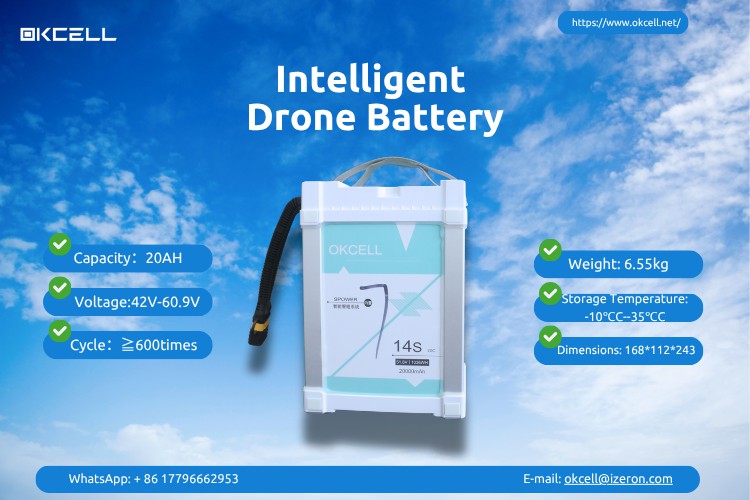
Besides, a high-quality lithium-polymer balancing charger is required to make sure all cells are charged uniformly for best performance. Balancing charging ensures that each cell reaches its optimal operating state without overworking any single cell in the pack, hence prolonging its overall lifespan. OKCELL intelligent drone batteries have an inbuilt balancing and protection circuit to maintain the stability of the cells automatically, enhancing safety during charging.
Avoid extreme high or low temperatures
The life and performance of a drone battery is greatly dependent on temperature. In low-temperature conditions, the chemical reaction activity inside the battery is reduced; power is consumed more quickly, drastically reducing flying time. High temperatures can very well pose the threat of overheating, swelling, or even rupture of the batteries and hence are very threatening for safe and long battery life.
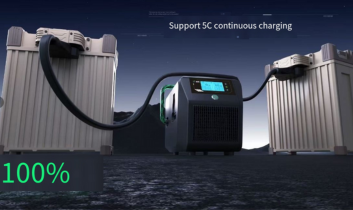
When flying in cold weather, take appropriate measures to keep the battery warm before use. For example, cover the battery with an insulated cover. In hot weather, protect the battery from direct sunlight. Immediately after each and every flight, do not charge the battery; let it cool down naturally. Charging of batteries should not be done while they are still hot, as that may result in internal damage. OKCELL Super 5C intelligent drone batteries ensure performance stability in a wide range of temperatures and thus boast reliable output both in very hot and very cold conditions.
Follow appropriate storage recommendations
Never store batteries fully charged or nearly full if the drone is not going to be used in some time. Instead, store the batteries at the “storage voltage' level, maintaining each cell's voltage at approximately 3.7-3.8V. Long-term health of the cells depends on the voltage a battery is set for, so most balanced chargers have a storage mode for setting the appropriate voltage on a battery.
In addition, batteries should be stored in a cool and dry place away from any metals or metal surfaces; this is to avoid the possibility of short circuits due to metallic contact that might raise some safety concerns. A proper storage environment will effectively delay battery performance degradation and extend battery life.
Regularly cycle your batteries
It is a good practice to rotate several drone batteries to avoid overusing any one of them. This way, all batteries are given equal work and do not make any one age out much faster than the rest. Frequent cycling of each will make the battery cells active and in balance, hence maintaining the optimal voltage and good health. These batteries stay efficient, stable, and reliable through continuous operation due to regular charge and discharge processes.
It should be noted, however, that long-term battery storage shouldn't involve a complete charge-discharge cycle; instead, they are kept at their storage level, or about 50-60% charge, where protection for the cells is turned on. Subsequently, after a few months, merely recharge the battery back to this level to keep it functional at the basic level and prevent degradation. Such a strategy minimizes chemical aging and maintains both long-term battery performance and life.

Check for physical damage
Before every use, always inspect the battery for any visible physical damage: swelling, cracks, puncture marks on the surface, or exposed/worn wires. An in-depth pre-flight inspection can help you identify issues early that could be crucial for safety. Basic yet important, this avoids malfunction and further deterioration of your drone's power system and ensures that every mission starts smoothly and safely with a healthy battery.
Battery swelling is a clear symptom of internal cell damage and must never be overlooked. Swollen batteries can result in overheating, the leakage of chemicals, and even fires in extreme cases, due to inappropriate usage or charging methods. They have to be treated with utmost care, and their usage should be brought to an immediate pause the moment any sign of swelling in the battery is detected. Always dispose of damaged batteries following proper safety guidelines to avoid accidents and prevent damage to equipment nearby.
Use battery monitors and alerts
Most modern drones are designed with onboard battery monitoring devices which offer real-time data on the state of their batteries, including any issues that might arise, voltage at any particular time, and percentage charge remaining. This keeps users informed of the operating status of the battery.
Through these features of battery monitoring, a user can easily avoid the over-discharging of a battery either because of negligence or flying with inadequate power in the batteries.Some even feature customizable battery alert settings that allow users to set the threshold at which a battery level alert is needed. Once it hits this threshold, the drone will trigger an alert, adding another layer to flight safety.
Conclusion
Proper maintenance of drone batteries is key, not only in prolonging service life but also in ensuring the stability of flights and operational safety. It's about taking care that details such as avoiding complete discharges, correct charging methods, proper storage, and periodic checks are dealt with. Keeping all of these practices constant tends to help with preserving the health of the batteries, thereby keeping reliable power performance in each flight.
As technology advances and the use of drones becomes increasingly important, maintaining the integrity of the battery has become very significant for efficient, safe, and continuous operations. Good habits of maintenance and proper use of batteries mean longer flights, greater stability, and overall better performances in whatever kind of mission.

点击右上角
分享给朋友吧







 Long by picture save/share
-

The Heart of Your Operation: A Complete Guide to the Agricultural Drone Battery
A deep dive into how agricultural drone batteries influence power, safety, flight time, and operational efficiency, offering essential insights on specs, maintenance, and choosing the right battery.
MORE -
How China Drone Battery Manufacturers Are Ensuring Quality and Safety
China’s drone battery manufacturers are raising industry standards through advanced engineering, strict safety controls, and reliable quality systems that ensure safer, longer, and more stable flight performance.
MORE -
Expert Guide to Agricultural Drone Battery Maintenance
Ensure safer, longer agricultural drone flights with practical battery maintenance guidance that helps prevent power loss, extend lifespan, and keep field operations efficient.
MORE -
What Are the Best Practices for Maximizing Drone Battery Performance
Maximizing drone battery performance starts with understanding how different missions stress power systems. Smarter charging, temperature control, and load management keep flights safer and longer.
MORE -
How to Charge a Drone Battery Safely and Effectively
Learn how to charge drone batteries safely and maximize performance with proper methods, smart charger choices, and essential practices that protect lifespan and flight reliability.
MORE -
Agricultural Drone Common Sense
Modern agricultural drones transform farming by enabling precise spraying, crop monitoring, and irrigation management, improving efficiency, sustainability, and smarter decision-making on farms.
MORE -
How Can Upgrading Your Drone Battery Improve Its Battery Life
Upgrading your drone battery can significantly extend flight time, stabilize power output, and improve reliability. Smarter chemistry and better design help every mission last longer and perform better.
MORE -
Essential Advice for Picking the Perfect Drone Battery
Discover how selecting the right drone battery impacts flight performance, efficiency, and reliability. Learn to match battery features with real-world needs for safe, stable, and long-lasting operation.
MORE -
How Custom Lithium Battery Packs Elevate UAV Performance
Custom lithium battery packs elevate UAV performance by extending flight time, enhancing stability, and ensuring safety, enabling drones to operate efficiently and reliably across demanding missions.
MORE -
Drone Battery Guide: Types, Safety, and Flight Time
Explore drone battery types, safety practices, and factors affecting flight time to maximize performance, extend lifespan, and ensure reliable operation for every mission.
MORE





Contact Us
With 18 years of extensive experience in battery production andcustomization, we have served thousands of clients. OKcell can providepersonalized one-stop customization services tailored exclusively for you.Contact us directly to explore our factory and products firsthand !
 Phone:+86 15093446331
 E-mail:sherry@izeron.com
 Address:Building 5, 5th Floor, 503, Yida Industrial Park Phase 1, Jinju Street, Zhengzhou High-tech Zone.
OKCELL Copyright © 2021 all rights reserved
Since 2005, with 18 years of dedication to custom battery manufacturing, supported by a team of 300 employees, multiple R&D centers, and 65 patented inventions, we are committed to becoming the world’s leading smart battery manufacturing service provider.
ABOUT COMPANY
CONTACT US
Email Address:
 :sherry@izeron.com
 :+86 15093446331
点击右上角
分享给朋友吧
OUR LOCATION
OKCELL is located at Building 5, 5th Floor, 503, Yida Industrial Park Phase 1, Jinju Street, Zhengzhou High-tech Zone.
OKCELL Copyright © 2021 All rights reserved
Technical Support:ShanHou