





How to charge drone battery without charger
Time: 2025-10-29 11:13:03
Why Is 'Charging Without a Charger' a Common Problem for Drone Operators
Increasingly, drones are used in agriculture, security, survey, aerial photography, and inspection. Batteries are one of the most significant features determining work efficiency.
- Some pilots, however, were victims of such situations.
- Leaving the charger behind during outings for field operations.
- Damaging the charger while it is being carried.
- Plugging in third-party batteries makes the original charger unusable.
- Or accessing power accessories is made impossible when working in remote areas.
In such scenarios, safe charging of drone batteries proves to be an extremely practical concern. It's critical to point out—drone batteries are considerably different from standard 18650 cells or smartphone batteries.
Most drones use high-energy-density lithium polymer (Li-Po) batteries. While they allow for light-weight design, high discharge mass, and high energy density, they are extremely 'fragile' and extremely sensitive to charging conditions.
Charging from a non-charging source can easily bring severe consequences. First is that cell imbalance would result in unstable capacity, impacting the performance of the battery pack as a whole. Second, improper voltage and current control would result in internal overheating, leading to swelling or burning danger. Third, voltage mismatch would make the battery unusable immediately.
So, it is proper knowledge of a drone battery charging profile and emergency procedures in safety that is the elementary knowledge all operators, pilots, and even battery buyers should have.
Before You Start: Know Your Battery Type and Specs
Not all drone batteries are charged equally. Different models of batteries differ in chemical makeup, shape, and battery management systems (BMS), each giving rise to efficiency during charging and battery life.
Overview of Mainstream Battery Types
Li-Po (Lithium Polymer) Batteries: Most widely utilized in agricultural crop protection drones and professional photography drones. Typically 3.7V per cell, typical configurations are 6S (22.2V), 12S (44.4V), etc. Balanced charging is required, and overcharge and undercharge need to be avoided.
Li-ion (Lithium-ion) Batteries: Used on some light-weight aerial photography quadcopters or consumer-level quadcopters. They have high energy density but lower discharge capacity. Charging is comparably gentle, but matching voltage and protection chips are still required.
NiMH (Nickel-Metal Hydride) Batteries: Used primarily on toy-level quadcopters. They give lower voltage and are not as finicky about charging methods.
Important Information on Battery Labels
Verify the label or packaging of the battery to ensure the following parameters: Rated Voltage (Voltage), Capacity (mAh), Charge Rate (C-rate), Connector Type (XT60, XT90, T-plug, etc.) Emergency charging can only be done after ensuring these specifications.
⚠️ CAUTION: Never charge batteries with no idea about their parameters. Misleading connections or voltage incompatibility can permanently ruin the battery or lead to fires.

Four Feasible Alternative Charging Methods (with Detailed Instructions
Using a Universal Balanced Charger (Recommended)
The universal balanced charger is the most professional and safest non-original replacement product. Its method is to identify the voltage of every cell in order to perform balanced charging without over-charging any cell. Steps to use are as follows:
- Select proper charging connector (XT60, XT90, etc.) and verify polarity.
- Select battery type on the charger (Li-Po or Li-ion).
- Step current to 0.5C–1C (for instance, 2A–4A for a 4000mAh battery).
- Allow the battery to be connected and observe if the voltages of the balance ports are uniform.
- Charge inside a fireproof bag with round-the-clock monitoring.
The advantage of the method is that it is highly charged and precise in safety, hence extending battery life quite effectively. It is most appropriately suited for professional applications where there is frequent charging. It does have its own drawbacks, however—the equipment is a bit pricey and heavy, hence not very portable like the standard charger. Hence, it turns out to be a bit less handy to be used in field or emergency situations.
Using an Adjustable DC Power Supply (For Professional Users Only)
Adjustable DC power supply (or DC adjustable power supply) is a lab-grade equipment with manual output voltage and current adjustment. It may be utilized to provide stable voltage input to batteries in the event of an emergency or lack of a charger. Key Operating Points:
- Set the output voltage to the battery's nominal voltage (e.g., 11.1V for a 3S battery);
- Configure the current limiting function (recommended at 0.5C);
- Connect positive and negative cables, ensuring correct polarity;
- After powering on, continuously monitor current and voltage changes;
- Immediately cease charging when voltage approaches full charge (4.2V per cell).
Caution: Universal balanced chargers require minimal electrical knowledge to prevent wiring or parameter errors. Never be left unattended. Monitor cell voltage with voltage tester or balancing tool for safety and stability.
Case: On a mountain mission, an agricultural drone operations crew experienced a charger failure due to rain damage. Successfully charging a 12S battery to 70% capacity with a portable DC power supply of 44.4V and 15A current-limited output, the crew was able to complete successfully the emergency flight operation.
Employing a USB adapter or car charger (for mini drones)
For toy-grade or consumer drones (e.g., SYMA, Potensic, DJI Mini, etc.), most of the batteries have internal USB charging protection modules and could be charged directly from the computer or car charger power plug.
Tips for Running:
- Use the original cord or the same specification (5V/2A output).
- Don't use quick-charging adapters (e.g., PD or QC) in order to avoid overvoltage.
- Ensure that the USB indicator light flashes normally in order to indicate normal working.
- If the longer than 2 hour charging does not produce any response, stop operation and check the interface.
The mentioned method has the characteristics of portability, simplicity, and safety and hence applicable for use under travel or emergency charging conditions without requiring complex hardware. Its weaknesses are shown too: it can be applied to low-power batteries with USB protection modules but cannot satisfy industrial-grade or high-capacity drones' charging requirements.
Directly charging using the drone's main charging port
There are some newer models of drones which have charging built right into the device, where the batteries get charged from the Type-C or DC port of the drone directly. For instance, some DJI and Autel models directly have support for charging using power banks or power adapters. Operating Tips:
- Read the manual to confirm your drone casing is supported for this feature.
- Only use manufacturer-approved power cables and adapters.
- Use counterfeit-free Type-C cables to avoid overheating and damage to the ports.
- Managing, though convenient, be wary of using this method in cold or damp environments.

Safety Precautions for Non-Original Chargers
Safety is never sacrificed when charging drone battery packs. Whatever charge method is employed, follow these precautions:
- Never leave charging unattended: Monitor while in operation to avoid overheating or unusual swelling.
- Use explosion-proof fireproof bags: Charge batteries in dedicated explosion-proof fireproof bags.
- emperature control: Charge at temperatures below 45°C (113°F) since heat accelerates cell aging.
- Balance battery cells: Regularly keep cells balanced by a balancing charger to attain maximum lifespan.
- Avoid serial charging or mixing batteries of different brands/models.
- Watch voltage levels: Immediately stop using if the voltage of any cell drops below 3.2V or exceeds 4.2V.
- Professional guidance: Conduct a balancing charge/discharge maintenance cycle after every 10 charges to ensure capacity consistency and discharge stability.
Situations Where Charging Should Never Be Attempted
Although you might know emergency charging methods, there are certain situations under which charging must not be attempted. They include bulging, leaking, deformed, or water-logged batteries. They are danger batteries, and charging them could result in overheating, fire, or explosions. Utilize them immediately to ensure safety to the device and person.
Do not utilize burnt, loose, or indefinite polarity connectors, or faulty temperature and internal pressure of gas connectors to charge batteries. The batteries should be prevented from use immediately and recycled based on environmental legislations. Never attempt charging or reuse them for safety and environmental purposes.
Professional Recommended Charging and Battery Solutions
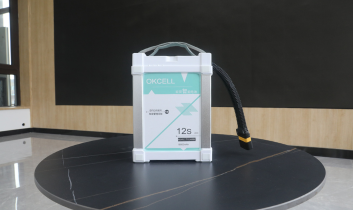
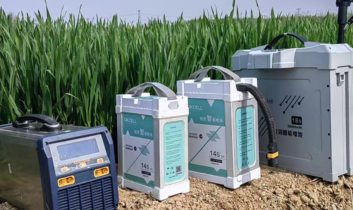
For those customers who might be engaged in outdoor flight operations or factory work, the most ideal option is to have a smart drone charging system. Take Zhengfang drone battery as an example: our own smart drone battery and multi-purpose charger features:
- BMS Intelligent Protection: Online cell status detection to prevent overcharging and over-discharging.
- Balance Charging: Discrete control of each cell extends lifespan by over 30%.
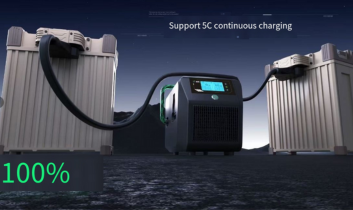
- Multi-Port Fast Charging: Charges several batteries simultaneously, significantly improving operating efficiency.
- Wide Voltage Input Design: Is compatible with 220V mains power, generators, or car power supplies.
- Comprehensive International Certifications: Complies with CE, UN38.3, MSDS, RoHS, and other international standards.
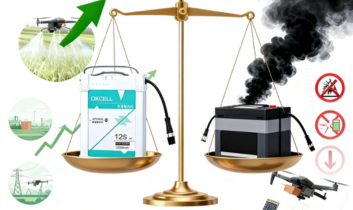
Selecting professional charging systems not only guarantees safe charging of batteries with efficiency by eliminating over-discharging and over-charging risks, but also reduces maintenance and replacement costs in the long run by a great extent. In turn, precise voltage and current control prolongs battery life and ensures consistent performance of the battery, thereby enhancing flight dependability and efficiency on long-endurance missions. This offers extra economic benefits and safety guarantee to routine operations.
Conclusion: Both Safety and Efficiency Are Fundamental
The drone's battery is the 'power heart' of flight, and charging means have direct impact on its reliability and life span. In emergencies or when not using the original charger, it is possible to charge it through temporary means by universal chargers, power supplies, or USB outlets, but they are temporary in nature.
In the long run, investing in a high-quality charging system and backup batteries not only ensures the continuity and stability of drone missions but also reduces the risk of downtime or damage caused by battery failure during critical operations. More importantly, this investment can significantly lower maintenance and replacement costs, extend the overall lifespan of the equipment, and deliver higher operational efficiency and economic returns for businesses.

点击右上角
分享给朋友吧







 Long by picture save/share
-

The Heart of Your Operation: A Complete Guide to the Agricultural Drone Battery
A deep dive into how agricultural drone batteries influence power, safety, flight time, and operational efficiency, offering essential insights on specs, maintenance, and choosing the right battery.
MORE -
How China Drone Battery Manufacturers Are Ensuring Quality and Safety
China’s drone battery manufacturers are raising industry standards through advanced engineering, strict safety controls, and reliable quality systems that ensure safer, longer, and more stable flight performance.
MORE -
Expert Guide to Agricultural Drone Battery Maintenance
Ensure safer, longer agricultural drone flights with practical battery maintenance guidance that helps prevent power loss, extend lifespan, and keep field operations efficient.
MORE -
What Are the Best Practices for Maximizing Drone Battery Performance
Maximizing drone battery performance starts with understanding how different missions stress power systems. Smarter charging, temperature control, and load management keep flights safer and longer.
MORE -
How to Charge a Drone Battery Safely and Effectively
Learn how to charge drone batteries safely and maximize performance with proper methods, smart charger choices, and essential practices that protect lifespan and flight reliability.
MORE -
Agricultural Drone Common Sense
Modern agricultural drones transform farming by enabling precise spraying, crop monitoring, and irrigation management, improving efficiency, sustainability, and smarter decision-making on farms.
MORE -
How Can Upgrading Your Drone Battery Improve Its Battery Life
Upgrading your drone battery can significantly extend flight time, stabilize power output, and improve reliability. Smarter chemistry and better design help every mission last longer and perform better.
MORE -
Essential Advice for Picking the Perfect Drone Battery
Discover how selecting the right drone battery impacts flight performance, efficiency, and reliability. Learn to match battery features with real-world needs for safe, stable, and long-lasting operation.
MORE -
How Custom Lithium Battery Packs Elevate UAV Performance
Custom lithium battery packs elevate UAV performance by extending flight time, enhancing stability, and ensuring safety, enabling drones to operate efficiently and reliably across demanding missions.
MORE -
Drone Battery Guide: Types, Safety, and Flight Time
Explore drone battery types, safety practices, and factors affecting flight time to maximize performance, extend lifespan, and ensure reliable operation for every mission.
MORE





Contact Us
With 18 years of extensive experience in battery production andcustomization, we have served thousands of clients. OKcell can providepersonalized one-stop customization services tailored exclusively for you.Contact us directly to explore our factory and products firsthand !
 Phone:+86 15093446331
 E-mail:sherry@izeron.com
 Address:Building 5, 5th Floor, 503, Yida Industrial Park Phase 1, Jinju Street, Zhengzhou High-tech Zone.
OKCELL Copyright © 2021 all rights reserved
Since 2005, with 18 years of dedication to custom battery manufacturing, supported by a team of 300 employees, multiple R&D centers, and 65 patented inventions, we are committed to becoming the world’s leading smart battery manufacturing service provider.
ABOUT COMPANY
CONTACT US
Email Address:
 :sherry@izeron.com
 :+86 15093446331
点击右上角
分享给朋友吧
OUR LOCATION
OKCELL is located at Building 5, 5th Floor, 503, Yida Industrial Park Phase 1, Jinju Street, Zhengzhou High-tech Zone.
OKCELL Copyright © 2021 All rights reserved
Technical Support:ShanHou