





How to Choose Batteries for your Agricultural Drone
Time: 2025-11-05 11:29:31
In actual operation, there are some serious bottlenecks that the agricultural drone faces: limited flight time and unstable power output, with bad performance at low-temperature conditions. Frequent replacements, short missions, and inconsistent thrust indeed affect not only the operational efficiency but may at times lead to results such as uneven spraying or delayed tasks. What this calls for is a very reliable high-performance battery to ensure steady drone operation, extend flight endurance, and be highly efficient for heavy field applications.
How much do drone batteries weigh
The weight of the battery directly influences the key determinants of flight performance, such as endurance and efficiency. A well-balanced battery guarantees stable power delivery without straining the motors excessively. If a battery becomes too heavy, then, to maintain the same altitude, its propulsion system would need to work much harder, accelerating the power consumption rate while reducing the overall flight time. As such, the amount of energy loss increases, efficiency decreases, and the wear of the drone's main components increases during long-term intensive field operations.
Thus, the choice of a battery will be all about striking a balance between energy capacity and manageable weight. A light yet high-density battery allows a drone to fly with stability, improve its maneuverability, and cover larger areas with ease. On the other hand, fitting a too-large battery will add weight, translating into only minimum gains in endurance, lower overall lift efficiency, strain the motors, and eventually the cost-effectiveness of every flight mission.
What is the battery capacity of a drone
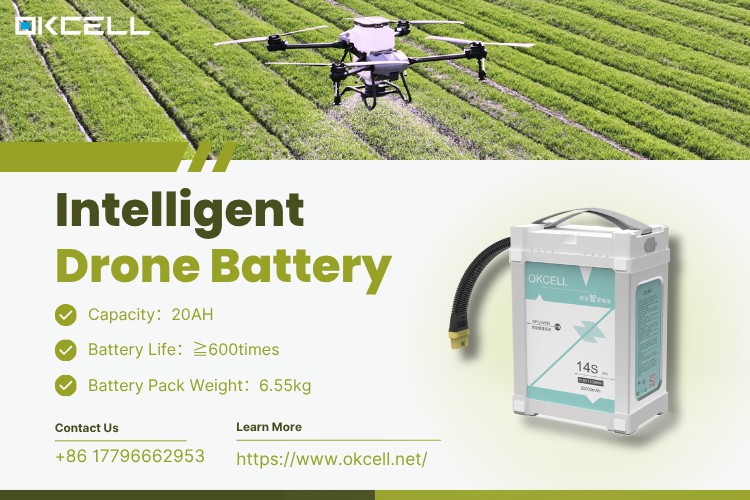
The capacity of the battery is directly related to the amount of energy that can be stored and the time the drone will be able to do its job, whether spraying or mapping. With higher capacity, it allows longer flights and a far greater coverage with less need to swap batteries. As the weight of the battery increases with increasing capacity, power demands increase on the motors. When not properly balanced, that extra weight reduces flight efficiency and could even cut down the actual working time in the field.
Parameters of the optimum capacity of a battery for agricultural drones are the structure of the aircraft, the volume of spraying, and mission time. In this context, it should cover one full operation cycle and guarantee a reasonable weight and stable performance of the machine. A well-balanced choice in the capacity aspect will make the drone fly efficiently and save energy, to ensure consistent operation and better reliability, resulting in high overall productivity in agriculture.
How many volts does a drone need to fly
The configuration of the power system and motor will largely determine the battery voltage. With the increase in voltage comes stronger thrust for handling heavy payloads such as spraying tanks and nozzles. In any case, the voltage has to work within the rated range of the motor to ensure stable operation. Our Okcell drone batteries are engineered to match the voltage requirements of agricultural drones, providing consistent thrust and reliable performance while protecting the motors from overheating or inefficiency.
The choice of the right voltage in an agricultural application is related to the issue of balancing power with endurance. A well-matched voltage will enable the drone to provide enough thrust while keeping energy consumption low during long working sessions. Usually, the drone is designed by the manufacturer to operate within a specific voltage range; hence, following the power specifications of the equipment promises better performance and safety, with a longer life for field components.
What is the discharge rate of a drone battery
Sometimes, the discharge rate is referred to as the C-rating, and it's a measure of the rate at which a battery is capable of releasing stored energy in order to power the motors of a drone. A higher C-rating means a higher current output that is capable of supplying constant thrust even when a high load is applied. For a big spraying drone, this will be quite important because consistent and powerful energy delivery supports steady flight performance and reliable operation in demanding field environments.
The choice of the right discharge rate logically follows from the need to balance performance and safety of the battery. With too low a C-rating, overheating or failure to provide the required current in high-power applications reduces efficiency and can lead to shortened life. A properly rated battery allows efficient energy release with no significant voltage drop, thus providing stable output for the smooth operation of the drone on a continuous agricultural spraying mission.
The Role of BMS in Drones Battery
The BMS basically serves as the main controller for a drone battery to make it work safely and effectively. It monitors continuously the voltage, current, and temperature of each cell in order to keep the performance stable without any form of damage. In balancing the cells under charge and discharge conditions, the BMS prevents uneven wear and prolongs the life of the batteries while minimizing the risk of overcharging, overheating, or short circuits during long agricultural operations.
Beyond protection, the BMS also supports intelligent power management and data communication: recording real-time operating data, analyzing performance trends, and providing early warnings for any potential faults. All this enables operators to monitor battery health, schedule maintenance, and ensure energy delivery that's stable with every flight. Okcell BMS-equipped batteries can enable agricultural drones to maintain reliable performance while minimizing operational risks.
Why Extreme Temperature Performance in Drone Batteries Matters
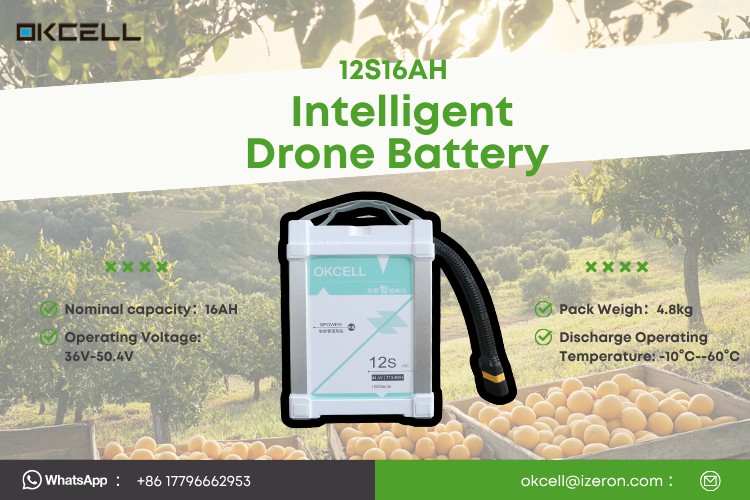
In real operation, a battery for an agricultural drone usually works under conditions that are extremely disparate-from extremely hot field environments to flying in cooler, early-morning conditions. A high-performance battery at very high or low temperatures ensures there is always reliable power output without overheating or losing capacity. This is of prime importance in completing spraying missions effectively. Our batteries are designed with materials and protections that maintain consistent performance across a wide temperature range, helping drones operate safely and effectively in challenging field conditions.
Temperature extremes can impact flight time and overall efficiency in many ways: high temperatures can degrade the batteries, while low temperatures reduce available current, limiting the capacity of the drone. A thermally stable battery maintains near-optimal capacity and predictable energy output, supporting longer, uninterrupted missions. Okcell Intelligent drone batteries are designed for low-temperature operation, with discharge performance from -10°C to 55°C and safe charging between 0°C and 45°C for dependable flights under cold conditions.
Choose a regular and reliable brand for drone battery
Among so many batteries for agricultural drones, the choice of a trustworthy brand determines the safety of flight, endurance, and general mission efficiency. Okcell provides professional agricultural applications with batteries specifically designed for weight and energy density balance, as well as thermal stability. With Okcell, one can expect consistent power output, a longer service life, and lower failure rates of batteries involved in key spraying or field operations, thereby giving the operator confidence to undertake every mission.
Apart from that, Okcell provides support in all aspects: technical guidance, advice on system integration, and customization according to different models. With strict manufacturing standards, each battery can be guaranteed to meet the requirements both in performance and safety. All these will enable Okcell batteries to bear the burden of heavy work, assure predictable energy delivery, and provide more continuous and reliable power in agriculture during long hours of work.
Conclusion
A good drone battery is more than power; it is confidence in every mission. Consistent performance, under ever-changing environmental conditions, enables operators to focus their attention on efficiently completing tasks and not worry about energy issues. Equipped with reliable batteries, agricultural drones keep flights smooth and maximize field coverage, ensuring spraying or mapping missions get the job done safely and effectively to improve productivity and operational reliability.

点击右上角
分享给朋友吧







 Long by picture save/share
-

The Heart of Your Operation: A Complete Guide to the Agricultural Drone Battery
A deep dive into how agricultural drone batteries influence power, safety, flight time, and operational efficiency, offering essential insights on specs, maintenance, and choosing the right battery.
MORE -
How China Drone Battery Manufacturers Are Ensuring Quality and Safety
China’s drone battery manufacturers are raising industry standards through advanced engineering, strict safety controls, and reliable quality systems that ensure safer, longer, and more stable flight performance.
MORE -
Expert Guide to Agricultural Drone Battery Maintenance
Ensure safer, longer agricultural drone flights with practical battery maintenance guidance that helps prevent power loss, extend lifespan, and keep field operations efficient.
MORE -
What Are the Best Practices for Maximizing Drone Battery Performance
Maximizing drone battery performance starts with understanding how different missions stress power systems. Smarter charging, temperature control, and load management keep flights safer and longer.
MORE -
How to Charge a Drone Battery Safely and Effectively
Learn how to charge drone batteries safely and maximize performance with proper methods, smart charger choices, and essential practices that protect lifespan and flight reliability.
MORE -
Agricultural Drone Common Sense
Modern agricultural drones transform farming by enabling precise spraying, crop monitoring, and irrigation management, improving efficiency, sustainability, and smarter decision-making on farms.
MORE -
How Can Upgrading Your Drone Battery Improve Its Battery Life
Upgrading your drone battery can significantly extend flight time, stabilize power output, and improve reliability. Smarter chemistry and better design help every mission last longer and perform better.
MORE -
Essential Advice for Picking the Perfect Drone Battery
Discover how selecting the right drone battery impacts flight performance, efficiency, and reliability. Learn to match battery features with real-world needs for safe, stable, and long-lasting operation.
MORE -
How Custom Lithium Battery Packs Elevate UAV Performance
Custom lithium battery packs elevate UAV performance by extending flight time, enhancing stability, and ensuring safety, enabling drones to operate efficiently and reliably across demanding missions.
MORE -
Drone Battery Guide: Types, Safety, and Flight Time
Explore drone battery types, safety practices, and factors affecting flight time to maximize performance, extend lifespan, and ensure reliable operation for every mission.
MORE





Contact Us
With 18 years of extensive experience in battery production andcustomization, we have served thousands of clients. OKcell can providepersonalized one-stop customization services tailored exclusively for you.Contact us directly to explore our factory and products firsthand !
 Phone:+86 15093446331
 E-mail:sherry@izeron.com
 Address:Building 5, 5th Floor, 503, Yida Industrial Park Phase 1, Jinju Street, Zhengzhou High-tech Zone.
OKCELL Copyright © 2021 all rights reserved
Since 2005, with 18 years of dedication to custom battery manufacturing, supported by a team of 300 employees, multiple R&D centers, and 65 patented inventions, we are committed to becoming the world’s leading smart battery manufacturing service provider.
ABOUT COMPANY
CONTACT US
Email Address:
 :sherry@izeron.com
 :+86 15093446331
点击右上角
分享给朋友吧
OUR LOCATION
OKCELL is located at Building 5, 5th Floor, 503, Yida Industrial Park Phase 1, Jinju Street, Zhengzhou High-tech Zone.
OKCELL Copyright © 2021 All rights reserved
Technical Support:ShanHou