





Drone Battery Manufacturer---An Energy Solution For All
Time: 2025-11-18 11:02:18
In this modern, ever-changing landscape of UAVs, a battery is no longer just a part of a drone, it is the heart of each. As new industries like agriculture, inspections, logistics, and many others become increasingly dependent on drones, demand for advanced reliability and high-performance energy solutions has enabled them to fly longer, operate more efficiently, and execute. Operating longer forward has never been greater. Advanced battery technology lets them fly for longer, operate with increased efficiency, and carry out complex missions with confidence and precision.
Why Battery Manufacturers Are Driving Drone Innovation
Today, with batteries dictating how far, at what speed, and how safely a drone can perform, the manufacturers of those batteries have turned into critical drivers in this chain of innovation. As endurance, payload, and operational efficiency grow in interest, the battery has become not just a supportive component but a strategic technology driver that defines and develops capability and mission potential for drones.
Drone technology can only be forwarded by the drone manufacturers' going beyond conventional cell creation through advanced material integration and optimization of discharge characteristics, creating smarter BMS platforms that extend flying times, handle heavier workloads, and maintain stability in challenging environmental conditions-highly influential factors for adoption in agriculture, mapping, inspection, and logistics.
What Is the Use of a Battery in a Drone
Powering Flight and Navigation Systems
The motors, ESCs, flight controllers, GPS units, and communication hardware all draw their power from the battery. It is the stability of the battery that determines how long a drone can stay in the air and also how precisely it's going to react to control commands. In both consumer and professional applications, reliable battery performance ensures flight stability and navigation accuracy, supporting every function that keeps the aircraft safely aloft.
Supporting Commercial and Industrial Operations
Agriculture, mapping, inspection, filming, and beyond-these are industries dependent on the battery capacity and discharge efficiency for good mission duration and productivity. Higher-performance batteries will further power high-level sensors longer, guarantee stronger data transmission, and keep flights long with less superfluous downtime. That makes the battery a core component in successful missions requiring consistent output, precise data collection, and continued aerial performance.

Ensuring Reliability in Critical Missions
The battery should be able to sustain power output in conditions of variable load, temperature, and generally unpredictable conditions in highly demanding services such as emergency response, environmental monitoring, or security operations. Consistent energy supply means a drone stays in control, sending vital live video or sensor feeds to operate safely throughout high-risk missions. Where the success of the mission is not up for negotiation, dependability in battery performance is a basic necessity of operational integrity.
Advancements in Drone Battery Technology and Performance
Higher Energy Density for Extended Missions
Advances within lithium battery chemistry in recent years have enabled UAV batteries to hold much more energy without gaining size or weight. Optimized cell design, together with advanced high-energy-density materials, allows for longer flight times to support heavier payloads. Such an improvement is enhancing efficiency in agricultural spraying, mapping, inspection, and other industrial missions through solving limitations in previous battery technologies and allowing these drones to perform more challenging tasks with consistent reliability.
Advanced Lithium Power Systems for Long-Duration UAV Flights
Sophisticated lithium battery systems combine high-energy-density cells with lightweight structural design and smart thermal management. They maintain consistent output under high-load conditions for continuous operations. Optimized lithium solutions reach extended endurance in efficiently delivering energy, reliably performing, and offering long flight times-not by using experimental technologies like hydrogen or hybrid systems-but across agriculture, inspection, and mapping applications.
Intelligent Battery Management Systems (BMS)
Advanced functionality enables the BMS platforms to support continuous voltage, current, temperature, and state-of-charge monitoring necessary for safe operations. It guarantees better safety and reliability of such systems by preventing overcharge, deep discharge, and overheating. Battery management system optimizes charge cycles, thereby further extending battery life with continued performance and allowing operators to minimize UAV downtime while maintaining mission readiness-all without having to resort to sophisticated predictive maintenance algorithms.
Efficient Charging for High-Usage Operations
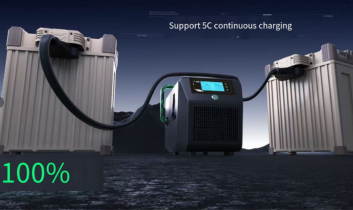
High-performance lithium batteries support faster charging than regular cells, and enable a drone to substantially reduce turnaround times in continuous operation. Of course, these are not extreme forms of fast charging, but they surely allow quicker times to restart flight missions and make agricultural, logistics, and inspection drones more effective.This function lets the drone maintain productivity at high-frequency tasks without compromising either battery longevity or safety.
Reliable Performance in Complex Environments
Safety and efficiency in flight are now possible with modern lithium battery technology, taking into consideration even the most demanding terrain and changes in temperature and wind. Equipped with high voltage stability and a large capacity for discharge, the UAV is in control even when it is loaded with sensors, cameras, or payloads. The batteries have been designed for demanding applications in industrial inspection, agriculture, and surveillance; hence, they ensure dependability in professional drone operations.
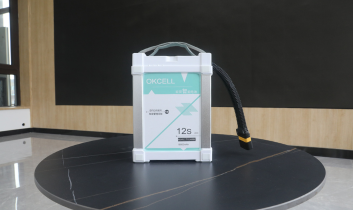
Why Choose OKCELL Drone Batteries
Excellence in Production
OKCELL has invested in a stable, high-capacity production system to ensure a supply chain that guarantees delivery on time. This predictability enables both drone operators and OEMs to carry out mission and deployment planning with confidence that the batteries will be there when they are needed. Dependable production processes mean consistent product quality, reducing operational risk of downtime for many applications within UAVs.
R&D Leadership
OKCELL is continuously innovating in drone battery technologies with its 'X' proprietary platform, sourced from Japan and the U.S. with advanced materials and manufacturing techniques that provide higher energy density, improve discharge performance, and further boost durability. Continuous research and development through customer feedback and scientific modeling ensure OKCELL batteries rank among the leading-edge developments in the industry for supporting the ever-changing needs of UAV operations.
After-Sales Commitment
Strong warranty programs and after-sales service centers throughout the world provide the backbone for OKCELL's corporate commitment to unparalleled support from start to finish. That is, customers will be provided with technical assistance, maintenance, and replacements when necessary. Reliable support like this means there is minimum disruption to operations, allowing UAV operators to focus on the mission at hand, rather than any concerns about battery reliability or potential downtime.

Safety Assurance
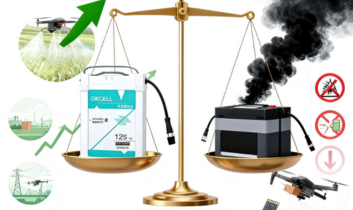
OKCELL attaches a lot of importance to the question of safety when designing its batteries. The products are rigidly tested by standards from CNAS and CMC, fully guaranteeing their reliability with a minimum risk for overheating, overcharge, or short circuits. That means drones fitted with OKCELL batteries can confidently be put to work in professional settings such as industries and commerce where strict observation of all protocols touching on safety is taken seriously.
One-stop service of battery customization
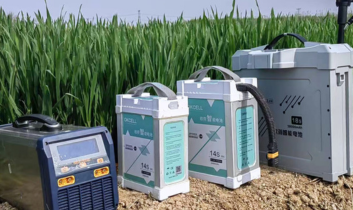
OKCELL has customized services for battery solutions in several types of UAVs. OKCELL will customize the capacity, form factor, and discharge rate-even the configuration of BMS-according to customers' requests. Such processes ensure that fully customized energy for a certain drone will be provided in one stop to simplify procurement and enhance performance, ensuring compatibility through different models and operation scenarios.
The Future of Drone Battery Technology
In turn, applications require longer-lasting, efficient, and usually reliable power as they grow. Future drone batteries are expected to be centered on even higher energy density and optimized lithium chemistries-enabling longer flight times with heavier payloads and delivering predictable performance for industrial, agricultural, and inspection missions with no added weight or compromise on safety.
These, in turn, will yield further gains in reliability and efficiency owing to intelligent management and advanced structural designs. Improved thermal control, robust construction, and effective charge cycles for the batteries will translate into longer flights without increasing the drone's downtime. New products will be part of the critical solution to sustainable and productive flights, answering the growing needs of professional UAV users around the world.
Conclusion
The future of drone operations depends on energy solutions that combine reliability, efficiency, and safety. By leveraging advanced battery systems, operators can unlock the full potential of UAVs, extending flight times and enhancing mission performance. With the right power at their core, drones become more than tools—they become versatile, capable partners in solving real-world challenges.

点击右上角
分享给朋友吧







 Long by picture save/share
-

The Heart of Your Operation: A Complete Guide to the Agricultural Drone Battery
A deep dive into how agricultural drone batteries influence power, safety, flight time, and operational efficiency, offering essential insights on specs, maintenance, and choosing the right battery.
MORE -
How China Drone Battery Manufacturers Are Ensuring Quality and Safety
China’s drone battery manufacturers are raising industry standards through advanced engineering, strict safety controls, and reliable quality systems that ensure safer, longer, and more stable flight performance.
MORE -
Expert Guide to Agricultural Drone Battery Maintenance
Ensure safer, longer agricultural drone flights with practical battery maintenance guidance that helps prevent power loss, extend lifespan, and keep field operations efficient.
MORE -
What Are the Best Practices for Maximizing Drone Battery Performance
Maximizing drone battery performance starts with understanding how different missions stress power systems. Smarter charging, temperature control, and load management keep flights safer and longer.
MORE -
How to Charge a Drone Battery Safely and Effectively
Learn how to charge drone batteries safely and maximize performance with proper methods, smart charger choices, and essential practices that protect lifespan and flight reliability.
MORE -
Agricultural Drone Common Sense
Modern agricultural drones transform farming by enabling precise spraying, crop monitoring, and irrigation management, improving efficiency, sustainability, and smarter decision-making on farms.
MORE -
How Can Upgrading Your Drone Battery Improve Its Battery Life
Upgrading your drone battery can significantly extend flight time, stabilize power output, and improve reliability. Smarter chemistry and better design help every mission last longer and perform better.
MORE -
Essential Advice for Picking the Perfect Drone Battery
Discover how selecting the right drone battery impacts flight performance, efficiency, and reliability. Learn to match battery features with real-world needs for safe, stable, and long-lasting operation.
MORE -
How Custom Lithium Battery Packs Elevate UAV Performance
Custom lithium battery packs elevate UAV performance by extending flight time, enhancing stability, and ensuring safety, enabling drones to operate efficiently and reliably across demanding missions.
MORE -
Drone Battery Guide: Types, Safety, and Flight Time
Explore drone battery types, safety practices, and factors affecting flight time to maximize performance, extend lifespan, and ensure reliable operation for every mission.
MORE





Contact Us
With 18 years of extensive experience in battery production andcustomization, we have served thousands of clients. OKcell can providepersonalized one-stop customization services tailored exclusively for you.Contact us directly to explore our factory and products firsthand !
 Phone:+86 15093446331
 E-mail:sherry@izeron.com
 Address:Building 5, 5th Floor, 503, Yida Industrial Park Phase 1, Jinju Street, Zhengzhou High-tech Zone.
OKCELL Copyright © 2021 all rights reserved
Since 2005, with 18 years of dedication to custom battery manufacturing, supported by a team of 300 employees, multiple R&D centers, and 65 patented inventions, we are committed to becoming the world’s leading smart battery manufacturing service provider.
ABOUT COMPANY
CONTACT US
Email Address:
 :sherry@izeron.com
 :+86 15093446331
点击右上角
分享给朋友吧
OUR LOCATION
OKCELL is located at Building 5, 5th Floor, 503, Yida Industrial Park Phase 1, Jinju Street, Zhengzhou High-tech Zone.
OKCELL Copyright © 2021 All rights reserved
Technical Support:ShanHou